




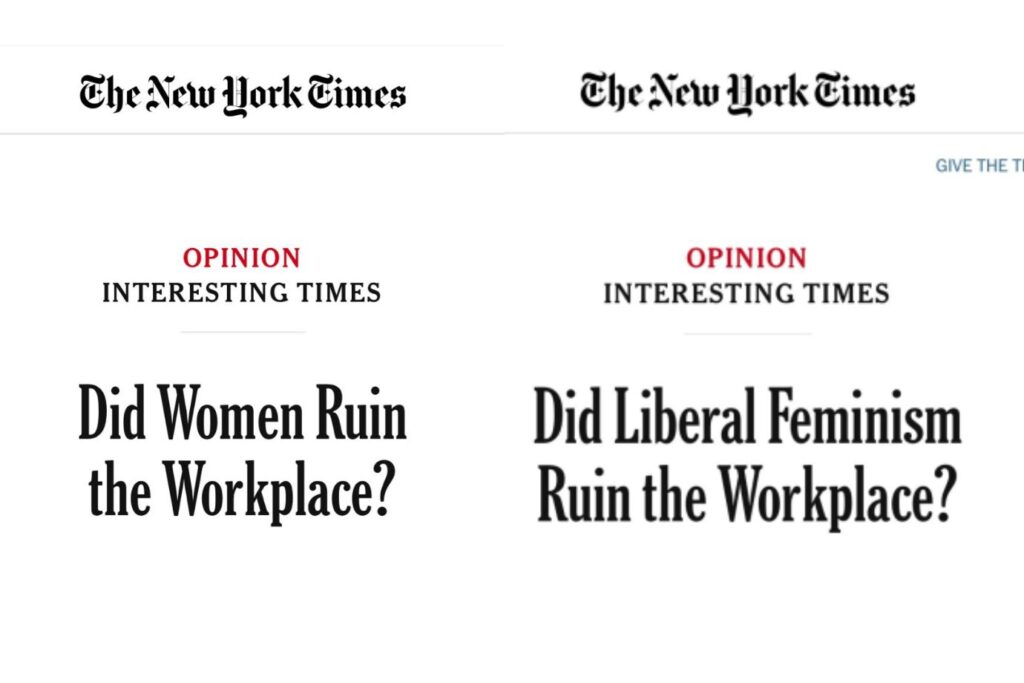
UPDATE: The New York Times is under fire for a controversial article questioning whether women have “ruined the workplace.” The headline sparked outrage online, prompting a swift change to “Did Liberal Feminism Ruin the Workplace?” just last week.
This instant backlash highlights the ongoing debate about gender dynamics in professional settings. The article features conservative columnist Helen Andrews, who has gained notoriety for attributing various societal issues to women’s growing presence in leadership roles. In her essay published in Compact Magazine, Andrews argues that women have weakened institutions by prioritizing empathy over competition.
As women now comprise the majority of college-educated workers in the U.S. and have outnumbered men in law schools since 2016, the article raises pressing questions about gender equality. Despite these advancements, women still occupy only 10 percent of Fortune 500 CEO positions, illustrating a significant gap in leadership representation.
The New York Times podcast episode featuring Andrews and fellow conservative writer Leah Libresco Sargeant discussed whether liberal feminism has failed women. The consensus? It has not. What has failed women is the outdated notion that their presence in the workplace is problematic.
Statistics reveal that women earn only 82 cents for every dollar earned by men, exacerbated by the “motherhood penalty” where women face professional setbacks after having children. The narrative that women are somehow responsible for workplace challenges is not only flawed but dangerous.
In response to the article, critics have pointed out the irony of men claiming that workplaces have become too emotional while simultaneously resisting basic human interactions. The online backlash included men lamenting about workplace greetings, showcasing a fragility that detracts from productive dialogue about gender issues.
The New York Times‘ decision to platform Andrews’ regressive views raises serious concerns about journalistic responsibility, particularly as women’s rights face continuous threats globally, from reproductive healthcare to equal pay. This rhetoric appears tone-deaf, especially at a time when inclusive leadership is more crucial than ever.
As women continue to advocate for equal rights and representation, the narrative that they are a problem rather than a solution is increasingly challenged. The evolution of the workplace, characterized by greater empathy, safety, and collaboration, should be celebrated, not criticized.
Women are not in the workplace as diversity hires or quotas; they are qualified professionals striving to dismantle the patriarchal systems that have historically marginalized them. The pervasive idea that their contributions are detrimental is not only misleading but also counterproductive to progress.
As discussions surrounding gender equity intensify, it is vital to recognize the positive impact of women in leadership roles. The ongoing struggle for equality has not only been about breaking glass ceilings but also about creating workplaces that foster collaboration and inclusivity.
The fallout from the New York Times article is a reminder that the fight for gender equality is far from over. Women are working diligently to reform a system that has long been biased, and if that means prioritizing empathy and collaboration, then they will continue to lead the charge.
In the face of this backlash, it is clear: women did not ruin the workplace; they are actively reshaping it for the better. As this story develops, the conversation around feminism and workplace dynamics will undoubtedly continue to evolve, making it a critical issue for readers to follow closely.
