Honduran citizens are casting their votes for a new president on March 10, 2024, amid heightened political tensions and a direct threat from former U.S. President Donald Trump. Trump warned that the U.S. would reconsider its aid to Honduras if voters do not support the right-wing candidate, Nasry “Tito” Asfura of the National Party. Just days before the election, Trump urged voters to back Asfura as part of a campaign against what he termed “narco-communism.” He stated, “If he doesn’t win, the United States will not be throwing good money after bad, because a wrong leader can only bring catastrophic results to a country,” through a post on Truth Social.
Approximately 6.5 million Hondurans are eligible to vote for a successor to left-wing President Xiomara Castro, who has held office since 2022 as the country’s first female leader. Castro is the wife of former president Manuel Zelaya, who was ousted in a 2009 coup. The political landscape in Honduras is fraught with issues such as poverty, drug violence, and corruption, contributing to a tense environment leading up to the elections.
Election Dynamics and Key Candidates
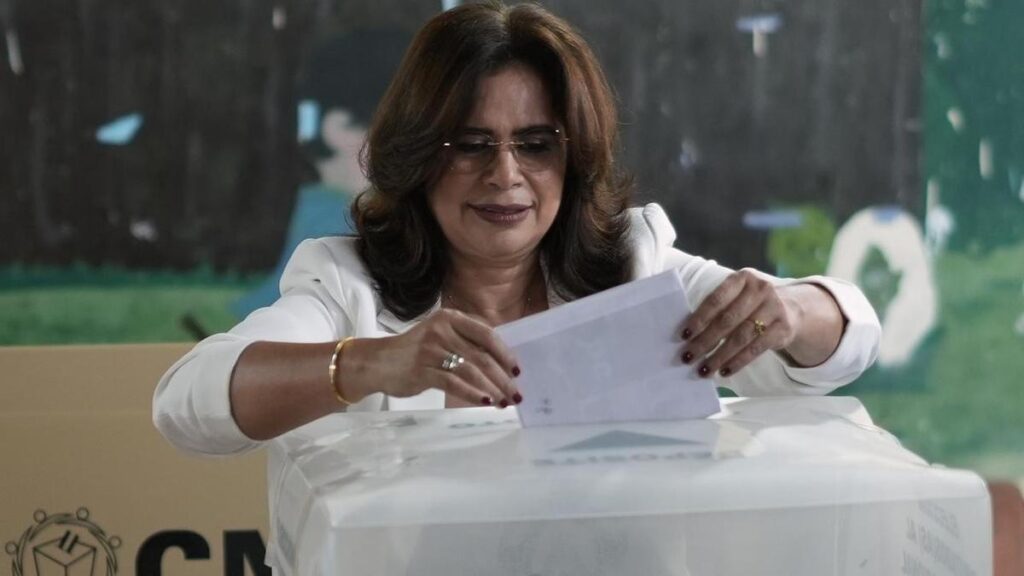
The election features five candidates, but the primary contenders include Rixi Moncada, former finance and defense minister representing the Libre Party; Asfura, the former mayor of Tegucigalpa; and Salvador Nasralla, a conservative television host and former vice president from the Liberal Party. As the election unfolds, Moncada emphasized the resilience of the Honduran people, declaring, “The Honduran people will head to the polls despite adverse circumstances,” as she cast her ballot.
Tensions are palpable, with both government and opposition figures accusing each other of trying to manipulate the election results. Such allegations echo the turmoil of the 2017 elections, which resulted in protests over alleged electoral fraud and left more than 20 people dead. Voters are also tasked with selecting new parliamentary representatives and local authorities.
Polls leading up to the election indicated no clear favorite among the candidates. The results are expected to start coming in around 21:00 local time (02:00 AEDT on March 11). Notably, Moncada stated she would not recognize preliminary electronic results released on election night, insisting on waiting for the final count of all paper tally sheets.
Political Implications and U.S. Influence
The outcome of this election holds significant implications, particularly in light of Trump’s remarks. The National Party, which has governed Honduras for over a decade following the coup that ousted Zelaya, is backed by Trump, who recently announced intentions to pardon former president Juan Orlando Hernández. Hernández is currently serving a 45-year sentence in the United States for drug trafficking-related charges.
The election not only represents a pivotal moment for Honduras but also reflects the broader influence of U.S. politics on Central American affairs. As Hondurans head to the polls, the choices they make will be closely scrutinized both domestically and internationally, with the potential for significant consequences based on the election’s outcome.