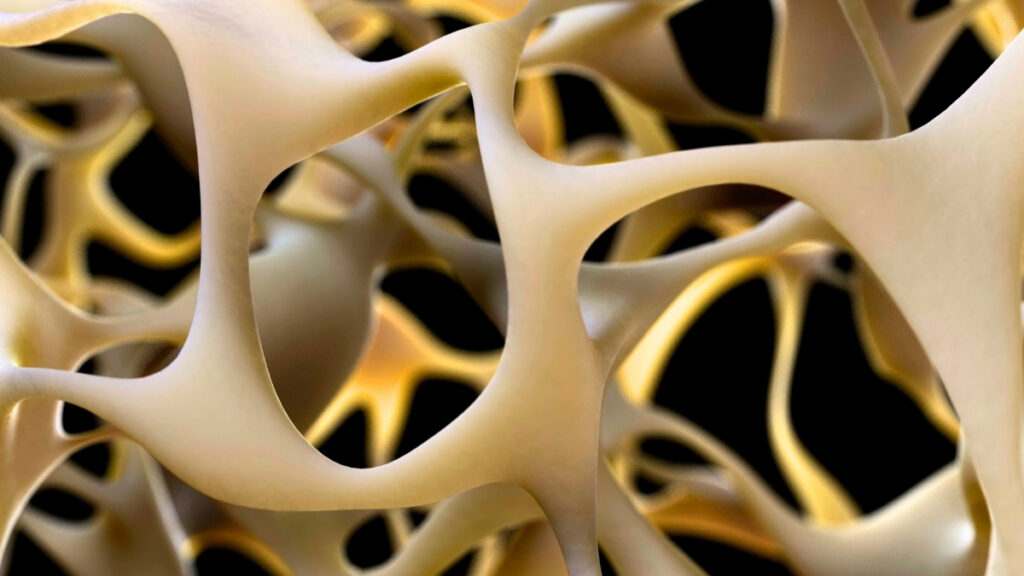
A recent study has identified a significant mechanism for strengthening bones that could potentially lead to new treatments for osteoporosis, a disease affecting millions globally. Conducted by researchers at the University of Leipzig in Germany and Shandong University in China, the research highlights the role of the cell receptor GPR133, also known as ADGRD1, in maintaining bone density through the activity of bone-building cells called osteoblasts.
The research team focused on variations in the GPR133 gene, which had previously been linked to differences in bone density. By examining mice with either a disabled GPR133 gene or one that could be activated with a compound known as AP503, the researchers discovered that mice deprived of this gene exhibited weak bones, mimicking the symptoms of osteoporosis. Conversely, when the GPR133 receptor was activated, bone production and strength improved significantly.
Ines Liebscher, a biochemist at the University of Leipzig, noted, “Using the substance AP503, which was only recently identified via a computer-assisted screen as a stimulator of GPR133, we were able to significantly increase bone strength in both healthy and osteoporotic mice.” In these experiments, AP503 acted as a biological catalyst, prompting osteoblasts to enhance their activity. The findings suggest that combining this receptor activation with physical exercise might yield even greater results in strengthening bones.
While these findings are based on animal models, the researchers believe that similar processes likely occur in humans. Liebscher pointed out that impaired GPR133 function leads to early signs of bone density loss in mice, paralleling the condition seen in humans suffering from osteoporosis. Current treatment options for osteoporosis can slow disease progression but do not reverse or cure the condition, often carrying risks of side effects or diminishing effectiveness over time.
The potential for future treatments remains promising, particularly as scientists explore various factors influencing bone strength. In a related development in 2024, researchers created a blood-based implant designed to enhance the body’s natural healing mechanisms for repairing bone injuries. This innovative material, described as “biocooperative regenerative,” utilizes synthetic peptides to improve the natural structure and function of blood clots. Biomedical engineer Cosimo Ligorio from the University of Nottingham remarked on the excitement surrounding the possibility of turning blood into highly regenerative implants, a process that could significantly boost healing.
Additionally, a recent discovery of a new hormone in female mice, known as maternal brain hormone (MBH), has shown promise in promoting bone growth. Research from the University of California, San Francisco revealed that this hormone can enhance bone density and strength, a breakthrough that may lead to new therapeutic strategies for osteoporosis.
The authors of the current study suggest that future treatments targeting GPR133 could not only strengthen already healthy bones but also restore degraded bone integrity, particularly in women experiencing menopause-related osteoporosis. Juliane Lehmann, a molecular biologist at the University of Leipzig, emphasized the receptor’s potential for medical applications in an aging population.
The findings from this study have been published in the journal Signal Transduction and Targeted Therapy. As researchers continue to investigate these promising avenues, the prospect of developing effective therapies for osteoporosis appears more attainable than ever.