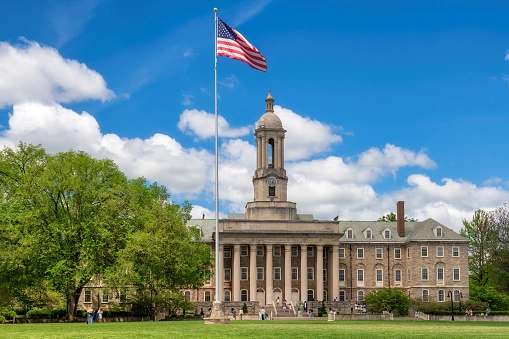
Recent developments in the United States have raised concerns regarding the future of academic freedom globally. President Donald Trump has implemented measures that significantly alter the landscape of research funding and academic inquiry, which could have far-reaching implications for countries such as Sweden. Annika Östman Wernerson, President of the Karolinska Institutet, highlighted these issues in the Swedish publication Medicinsk Vetenskap, stating that what is occurring in the U.S. represents a serious threat to the autonomy essential for academic pursuits.
Historically, the United States has been seen as a bastion of research and innovation, particularly following the Second World War. However, recent policies appear to politicize federal research funding, particularly through agencies like the National Institutes of Health (NIH). Research topics that include gender differences, climate change, and vaccines are now subject to exclusionary keyword lists, limiting the scope of inquiry and hindering scientific progress.
The impact of these changes is already palpable. At the Karolinska Institutet, approximately 25% of the 58 federally funded research projects have experienced funding cuts. While the overall financial impact may not be substantial, specific research groups are feeling the strain. Östman Wernerson noted the uncertainty surrounding the remaining projects, emphasizing the ripple effects that U.S. policies have on international collaborations.
“Many researchers from Sweden and beyond frequently travel to the United States for academic opportunities. The databases and resources essential for research are also predominantly hosted in the U.S. If these resources become restricted, the consequences could be enormous,” she explained. The current environment has led some European researchers to adopt cautionary measures typically reserved for visits to authoritarian regimes.
According to recent data from the Academic Freedom Index (AFI), more than 30 countries have witnessed a decline in academic freedom over the past decade. This trend is not limited to the United States; it has also affected nations like Hungary, where academic institutions face increasing governmental scrutiny and restrictions.
András Simon, a Professor of Cell and Molecular Biology at the Karolinska Institutet, expressed alarm over the deteriorating situation in the United States, drawing parallels with his home country of Hungary. “In just six months, the United States has become more authoritarian than Hungary regarding academic freedom,” he stated, referencing the extreme measures being adopted, such as the use of banned-word lists to filter research proposals.
While Sweden currently ranks in the top decile of the AFI, both Östman Wernerson and Simon caution against complacency. They argue that the erosion of academic freedom can happen anywhere, and proactive measures should be taken to protect it. Östman Wernerson stressed the need for strengthening safeguards around academic inquiry, urging society to recognize the benefits that academic freedom brings, such as innovation and improved public health.
The debate surrounding the usefulness of research funding has also surfaced. Politicians often prefer to allocate funds to projects that demonstrate immediate benefits, potentially stifling curiosity-driven research. Östman Wernerson cited the success of mRNA research during the pandemic as a prime example of how unexpected advancements can emerge from unrestricted inquiry. “We must ensure that research funding is not limited to specific fields, as broad-based research is essential for future breakthroughs,” she argued.
The governance structure of Swedish universities may also play a role in safeguarding academic freedom. Both Östman Wernerson and Simon advocate for a model that emphasizes collegial governance, where researchers have a say in decision-making processes. This structure could provide resilience against external pressures and authoritarian influences.
As the academic landscape evolves, the question arises: how should Swedish researchers respond to the shifts occurring in the United States? Östman Wernerson emphasized the importance of maintaining open lines of collaboration with American researchers. “We need to stand up for science and support our colleagues in the U.S. during these challenging times,” she concluded.
The ongoing changes in U.S. academic policy serve as a reminder of the fragile nature of academic freedom. As nations like Sweden reflect on their own systems, the emphasis must be on vigilance and proactive measures to ensure that the pursuit of knowledge remains unfettered by political agendas or ideological constraints.