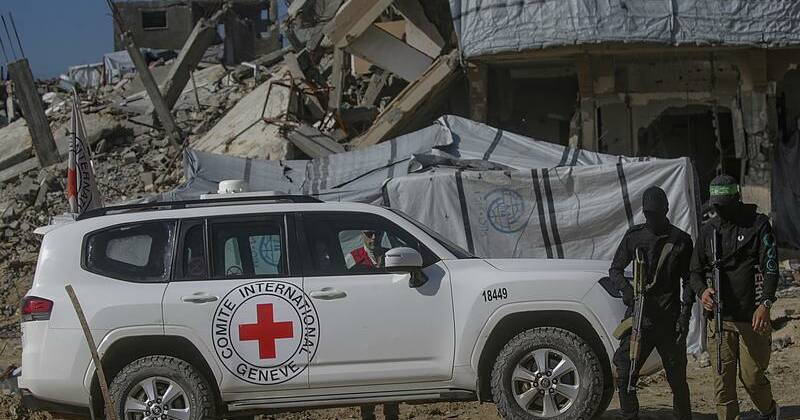
Palestinian militant group Hamas has handed over the remains of one of two deceased hostages still in Gaza, as confirmed by the International Committee of the Red Cross (ICRC). This action follows the terms outlined in the ceasefire deal established in October 2023. The office of Israeli Prime Minister Benjamin Netanyahu stated that Israeli forces in Gaza received what were described as “findings” intended for forensic testing in Israel.
The deceased hostages include Israeli police officer Ran Gvili and Thai national Sudthisak Rinthalak, both kidnapped during Hamas’ attack on October 7, 2023, which marked the beginning of a protracted conflict in the region. The ICRC has played a crucial role throughout the ongoing war, facilitating the release of living hostages and the transfer of remains, acting as an intermediary between Hamas and Israel.
Ongoing Violence and Hostage Crisis
In recent developments, Israeli airstrikes have continued in Gaza, resulting in casualties. Local health authorities reported the death of Palestinian freelance journalist Mahmoud Wadi in Khan Younis. A senior Israeli military official alleged that Wadi was involved in the October attacks, citing photographic evidence; however, Reuters has not independently verified this claim. Additionally, another Palestinian journalist sustained injuries during the same airstrike.
The violence persisted with reports from the Palestinian Civil Defence service indicating that Israeli tank shells struck a home in a Gaza City suburb, leading to two fatalities and injuring 15 others. The Israeli military did not respond immediately to requests for comments regarding this incident.
Despite a decrease in violence since the ceasefire commenced on October 10, Israeli operations against Hamas infrastructure have continued. Both sides have exchanged accusations regarding breaches of the US-backed agreement. According to Gaza health authorities, at least 357 Palestinians have died since the ceasefire began, while Israeli authorities reported that three Israeli soldiers were killed during this period.
Journalists and Media Workers Affected
The Committee to Protect Journalists (CPJ) has reported the deaths of 201 journalists and media workers in Gaza, Israel, and Lebanon, where the conflict has spread. This includes 193 Palestinians killed by Israeli forces in Gaza, six killed in Lebanon, and two Israelis who died during the October 7 attack. Notably, journalists affiliated with Reuters were among those killed.
The CPJ has raised concerns about the lack of accountability, noting that Israel has not published findings from any formal investigations into the deaths of journalists at the hands of its military. An Israeli military spokesperson stated that operations are aimed solely at combatants and military targets, and emphasized the importance of avoiding civilian casualties. Nevertheless, the spokesperson warned that remaining in active combat zones poses inherent risks, despite efforts to mitigate harm. Allegations have surfaced suggesting that some journalists were targeted due to purported links with Hamas, a claim that the news organizations involved have denied.
As the situation continues to evolve, both the humanitarian impact and the broader implications of the ongoing conflict remain significant concerns for the international community.