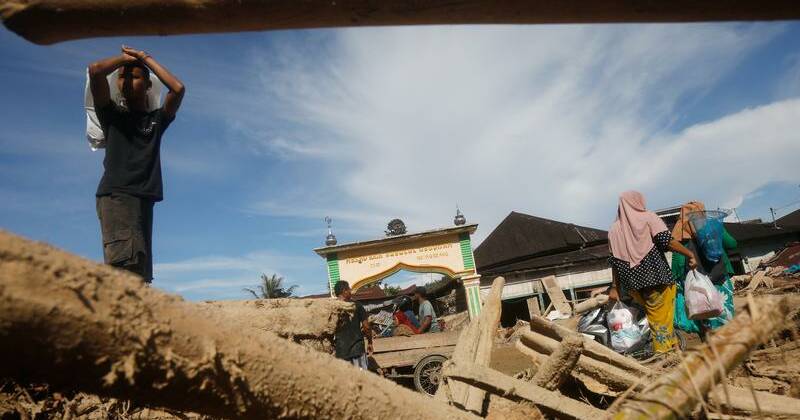
Heavy rainfall across parts of Asia has resulted in catastrophic floods and landslides, leading to the deaths of over 1,400 people in countries including Indonesia, Sri Lanka, Thailand, and Malaysia. The disaster has revealed stark economic disparities in the region, with Indonesia suffering the most, recording at least 753 deaths as of August 2023. Sri Lanka follows closely, reporting 465 fatalities, while Thailand has confirmed 185 deaths and Malaysia three.
Rescue teams are racing against time to reach isolated communities, as more than 1,000 individuals remain missing and villages are buried under mud and debris. Ongoing power and telecommunications outages have complicated rescue operations. Indonesian President Prabowo Subianto visited affected areas on Monday, promising aid and support for rebuilding efforts. However, he has not yet declared a national emergency or sought international assistance, unlike his counterpart in Sri Lanka.
In Sri Lanka, President Anura Kumara Dissanayake indicated that it was too early to determine the full extent of the casualties. The country is currently grappling with a severe economic crisis, which has limited its disaster response capabilities. Prime Minister Harini Amarasuriya recently met with diplomats to solicit support for relief and reconstruction efforts, highlighting the country’s reliance on external assistance.
While Indonesia and Thailand are mobilizing extensive rescue operations, deploying military assets, and allocating emergency funds, Sri Lanka faces significant challenges. The National Disaster Management Agency in Indonesia reported that the devastation from relentless rain and a rare tropical storm on the island of Sumatra is the deadliest since the 2018 Sulawesi earthquake and tsunami, which claimed over 4,300 lives.
Rescue efforts in Indonesia are hindered by washed-out roads and collapsed bridges. Authorities estimate that about 650 people are still unaccounted for in the hardest-hit provinces of North Sumatra, West Sumatra, and Aceh. Thousands of residents in flooded areas have clung to rooftops and treetops, awaiting rescue. The agency reported that more than 1.5 million residents have been displaced, with the disaster damaging tens of thousands of homes and public facilities.
In response to the crisis, the Indonesian government has deployed three hospital ships to the affected provinces, as local hospitals are overwhelmed with approximately 2,600 injuries.
In Sri Lanka, the floods are expected to have significant repercussions on an economy that had only recently stabilized after a tumultuous period. The nation is under an International Monetary Fund bailout program, which requires it to conserve foreign currency to repay defaulted external debt starting in 2028. Countries such as India, Pakistan, and the United Arab Emirates have initiated relief efforts, with additional support promised during diplomatic meetings.
Despite the challenges, recovery efforts in Thailand are progressing, according to government spokeswoman Rachada Dhnadirek. She announced that water and electricity have been restored in nearly all affected areas, and the government has disbursed over 1 billion baht (approximately $A48 million) in compensation to more than 120,000 households impacted by the floods.
As the situation evolves, the focus remains on aiding the victims and restoring normalcy in the affected regions.