




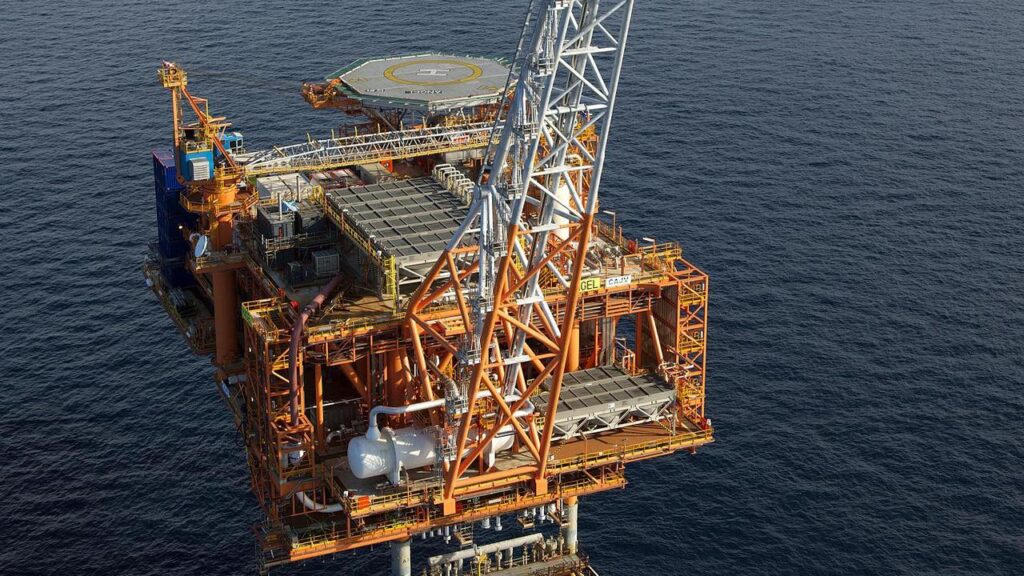
UPDATE: East Timor’s President, Jose Ramos-Horta, has confirmed a breakthrough in the long-stalled gas project in the Greater Sunrise fields, signaling a new era of collaboration with Australia and Woodside Energy. This development comes after decades of delays, with both parties agreeing to study a project that could produce 5 million tonnes of gas by 2032-35.
In an interview conducted earlier today in Perth, Ramos-Horta emphasized that the relationship between East Timor and Australia has dramatically improved, paving the way for this critical energy initiative. He stated, “I think there is a level of trust … that did not exist before,” highlighting the significance of Prime Minister Anthony Albanese’s supportive comments made in 2024.
The Greater Sunrise fields, located approximately 140 km south of East Timor and over 400 km from Darwin, contain an estimated 5.1 trillion cubic feet of gas. This marks the first time a timeline has been publicly announced for the project, illustrating a shift in dynamics after years of disagreements on gas transportation methods.
Previously, Woodside had favored piping gas to Darwin, while East Timor advocated for a liquefied natural gas plant on its southern coast. Under the leadership of CEO Meg O’Neill, Woodside has recently dropped its insistence on the Darwin route but has yet to fully endorse an East Timor development. Ramos-Horta expressed confidence that the new timeline would be honored, stating, “We are so confident of the Timor option, that we don’t have any contingency plan.”
The project, which faced significant delays due to a maritime boundary dispute resolved in 2018, has been revitalized by East Timor’s sovereign wealth fund, which has already bought out ConocoPhillips and Shell from the endeavor. Notably, the national oil company, Timor Gap, now holds over 56 percent of the field, marking a substantial shift in control.
Analyst Saul Kavonic from MST Marquee has estimated that constructing a plant in East Timor could incur an additional cost of $5 billion compared to Darwin. However, potential involvement from Chinese firms may influence Australia’s support for the Timor-based development due to geopolitical considerations.
Ramos-Horta reiterated the importance of Australia’s strategic role, stating, “Australia is indispensable to Timor Leste’s interests, to its security, to its economic wellbeing.” He emphasized East Timor’s preference to partner with Australia, Woodside, and Japan’s Osaka Gas rather than Chinese companies that have shown interest in the project.
This latest agreement represents a significant turning point in a project that has been fraught with complications. With a renewed focus on collaboration and trust, both nations aim to unlock the potential of the Greater Sunrise fields, which could have profound implications for East Timor’s economic future and energy independence.
As developments unfold, all eyes will be on the pace of progress made by Woodside and East Timor in the coming months. The commitment to this project could reshape energy dynamics in the region and set a precedent for future collaborations.
