




UPDATE: The Albanese government has just announced a substantial $95 million military aid package for Ukraine amid ongoing tensions with Russia. This decision comes as diplomatic talks in Russia have failed to yield a peace agreement, underscoring the urgency of support for Ukraine’s defense.
This new military aid, unveiled on Wednesday, marks the first significant contribution of military hardware from Australia since October 2024. The package includes $43 million dedicated to tactical air defense radars, munitions, and combat engineering equipment. Additionally, $50 million will be allocated to NATO’s Prioritized Ukraine Requirements List (PURL), a first for Australia in this initiative.
Deputy Prime Minister Richard Marles emphasized the importance of these contributions, stating they will “make a tangible difference in Ukraine’s defense against Russia’s illegal and immoral invasion.” He reaffirmed Australia’s commitment to standing in solidarity with NATO and Indo-Pacific partners for a just peace in Ukraine.
To date, Australia has provided over $1.7 billion in aid to Ukraine, including more than $1.5 billion in military assistance. This includes training for Ukrainian personnel through Operation Kudu, and the recent deployment of the E-7A Wedgetail aircraft to facilitate humanitarian and military logistics. As part of this ongoing support, Australia is also contributing $2 million to the Drone Capability Coalition, which supplies drones and drone parts to Ukraine.
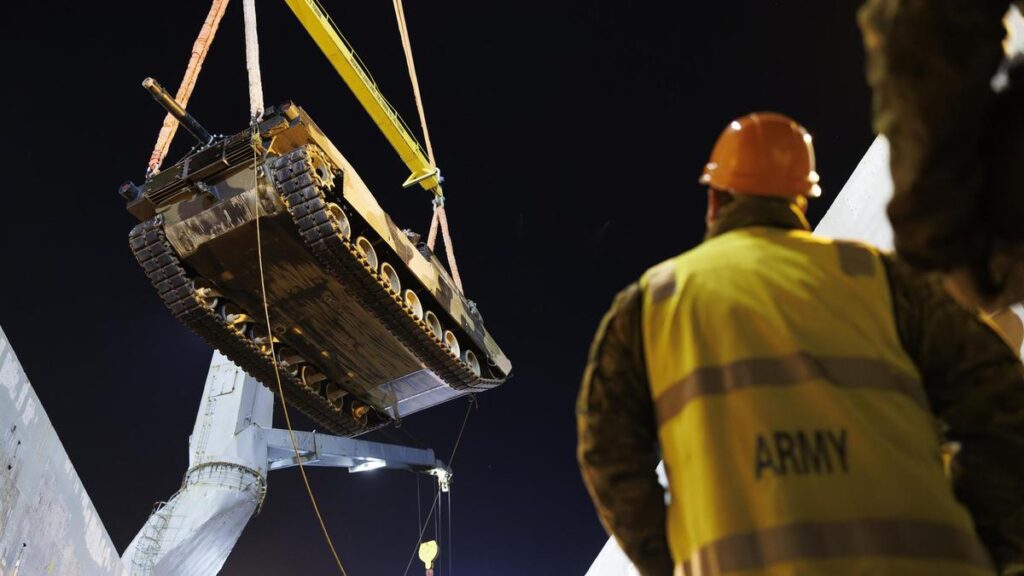
Moreover, the final delivery of 49 M1A1 Abrams tanks to Ukraine is set to occur in the coming weeks. Reports indicate that Australia is also considering a Ukrainian request for retired Tiger helicopters to bolster defense capabilities.
In addition to military support, the Albanese government is implementing sanctions on 45 “shadow fleet” vessels linked to Russia. These vessels reportedly operate under false flags, engaging in ship-to-ship transfers to bypass sanctions. Foreign Affairs Minister Penny Wong stated that these sanctions align with international efforts to reduce Russia’s oil revenues and limit funding for its invasion.
Wong noted Australia’s success in cutting direct imports of Russian energy products from $80 million before the invasion to zero, highlighting the country’s commitment to international sanctions. This comes as recent reports reveal that at least 25 sanctioned vessels have been found within Australian supply chains.
The announcement of these measures follows a failed meeting in Russia between President Vladimir Putin and US envoy Steve Witkoff, further complicating the peace process in Ukraine.
As the situation develops, the international community is closely monitoring Australia’s contributions and the effectiveness of these sanctions against Russia. The urgency of the situation underlines the need for continued support for Ukraine in its fight against aggression.
This is a rapidly evolving story. Stay tuned for more updates as they unfold.
