Myanmar’s military regime has announced plans for elections to take place in three phases, commencing on December 28, 2023, and concluding in January. The elections are widely anticipated to solidify the military’s grip on power, as the military-aligned party is expected to be declared the victor. This move comes at a time when the country remains mired in civil conflict, with the military engaged in ongoing battles against the People’s Defence Forces and various ethnic armed groups.
Since the military coup in February 2021, Myanmar has been engulfed in violence and unrest. Thousands of resistance fighters, political activists, and key figures—including former President Win Myint and prominent leader Aung San Suu Kyi—remain imprisoned. The military has maintained control over major urban centers and government functions, yet its brutal tactics, including airstrikes and drone attacks, have failed to eliminate resistance forces, which have gained control over significant territories. Consequently, the upcoming elections will only be conducted in 274 of the nation’s 330 townships.
Critics, both inside and outside Myanmar, view these elections as a façade. The military-dominated Union Election Commission has disqualified numerous political parties, including Aung San Suu Kyi’s National League for Democracy, citing arbitrary membership and operational requirements. The regime has also enacted restrictive laws that prohibit criticism of the elections, with severe penalties for dissent, including prison sentences of up to seven years and potential death penalties for certain offenses.
The military’s intent behind these elections is to project a veneer of legitimacy, both domestically and internationally. By showcasing what they claim to be democratic processes, the regime aims to create an illusion of stability and authority. This strategy is intended to consolidate power and potentially pave the way for increased international engagement, all while maintaining the current oppressive structure.
In response, the National Unity Government, operating in exile, and its international allies are urging the global community to refrain from sending election observers. They argue that legitimate elections cannot occur under the current conditions and have called for widespread condemnation of the military’s actions. Leaders of the Association of Southeast Asian Nations (ASEAN) have echoed these sentiments, emphasizing that any political dialogue must be preceded by an end to violence.
Despite ASEAN’s reluctance to engage with the elections, there remain questions about their response. While some ASEAN member states, like Thailand, have expressed skepticism about the military’s ability to create lasting peace, others may still consider sending observers, albeit cautiously. China’s stance appears supportive of the elections, but it has not publicly committed to participation in the observation process.
For the military junta, continued isolation from Western nations is less impactful than securing regional legitimacy. Neighbouring countries are increasingly focused on stability in the region, as they contend with issues such as irregular migration, environmental degradation from unregulated mining, and the rise of drug trafficking. The elections may provide cover for these nations to engage with the junta, despite the potential backlash regarding complicity in human rights abuses.
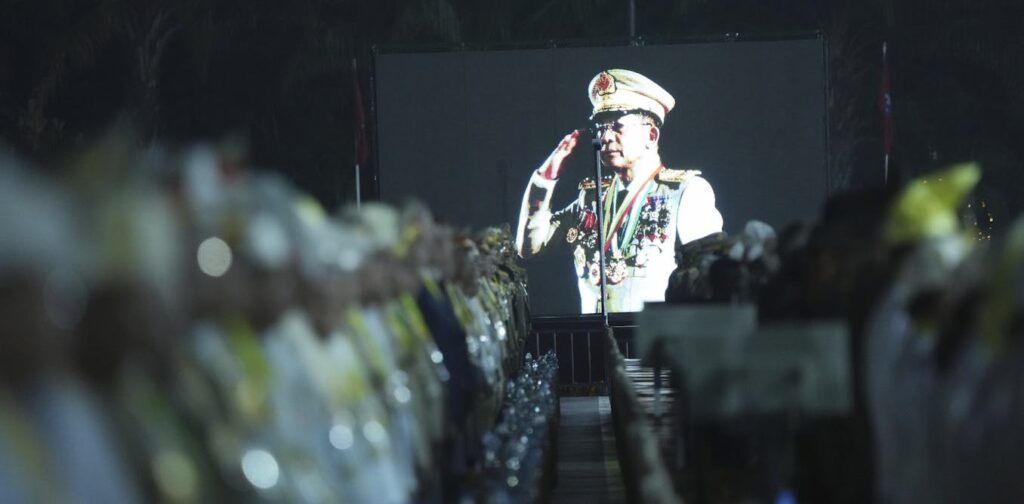
Unlike the elections of 2010, which were conducted under a different political landscape and led to a reformist government, the upcoming election is unlikely to signal a shift towards civilian rule. Instead, it is anticipated that the military will continue to assert its dominance, with Min Aung Hlaing likely to secure a presidential role while appointing a compliant successor to maintain military control.
While the elections may ultimately be a charade, they could lead to shifts within the military hierarchy. The replacement of Min Aung Hlaing might introduce a new dynamic, fostering the potential for negotiated peace, albeit this remains uncertain. Engaging with the reality of the situation will be crucial for the National Unity Government. Accepting that elections will occur might be necessary to remain relevant in the changing political landscape, rather than retreating into the background as international support dwindles.
As Myanmar stands on the precipice of yet another round of elections, the ramifications for its future remain deeply uncertain. With the military’s grip firm and resistance ongoing, the world watches closely to see how these developments unfold, hoping for a resolution that prioritizes peace and democratic governance.