Tasmania’s parliament has officially approved a contentious plan for a new $1.13 billion Australian Football League (AFL) stadium in Hobart. The decision, made late on Thursday following two days of intense debate, will pave the way for the Tasmanian Devils to join the AFL and AFL Women’s league by 2028.
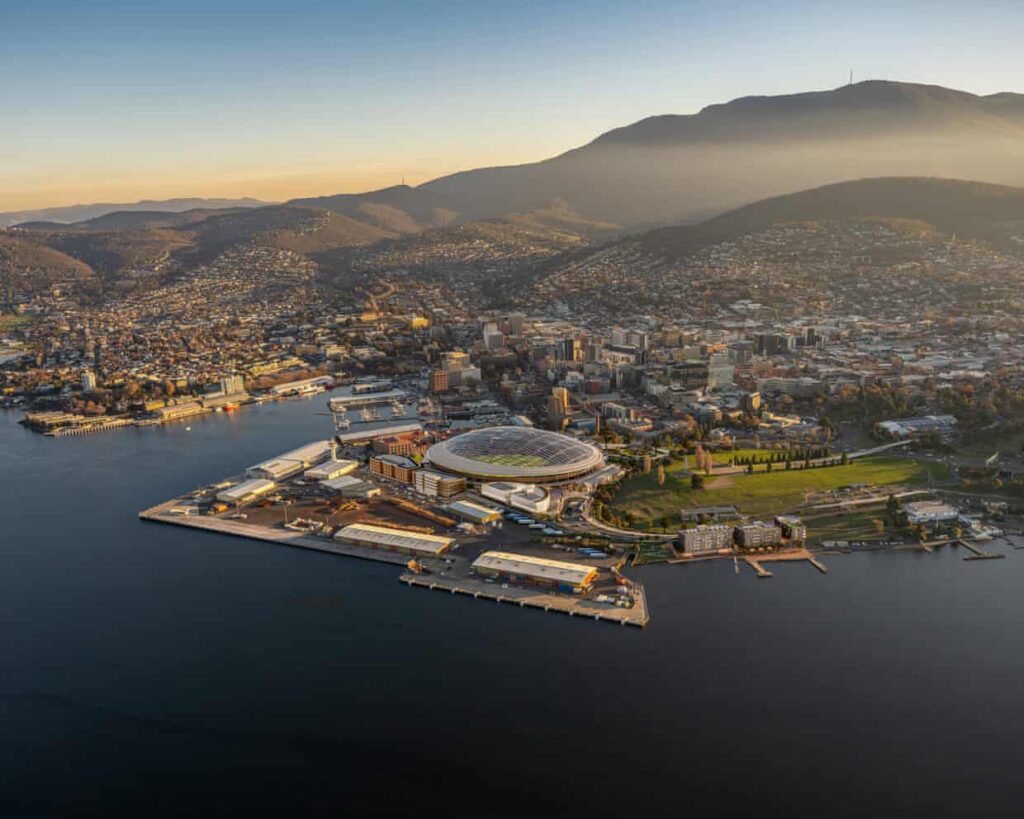
The new stadium, which will feature a capacity of 23,000 seats, is set to be constructed at Macquarie Point. The approval came from the state’s upper house of parliament, with a vote tally of 9-5. Independent MPs, including Bec Thomas, played a crucial role in securing the necessary support, ending years of speculation regarding the project’s future.
State Premier Jeremy Rockliff has been a vocal supporter of the stadium, describing it as a once-in-a-generation opportunity that could drive economic growth in Tasmania. “The Tasmanian Devils and aspiration for young people has brought it to this point where we’re going to get the job done,” he stated prior to the parliamentary debate.
Despite the backing, the stadium project has faced significant criticism. Opponents argue that the funds could be better allocated, especially considering Tasmania’s ongoing budget challenges. The state government has committed to capping its expenditure at $875 million, a decision influenced by negotiations with Thomas, who expressed empathy for community concerns. “I am genuinely sorry to those who desperately did not want me to support this,” she noted during the debate.
Public Reaction and Financial Commitments
The stadium proposal has sparked fierce protests from both supporters and detractors. An estimated 15,000 individuals participated in a pro-stadium rally recently, highlighting the divide within the community. In contrast, Jacqui Lambie, a federal senator from Tasmania, has publicly opposed the deal, suggesting it should be rejected outright.
Critics like Greens MP Cassy O’Connor have articulated concerns that the stadium will not benefit Australia’s smallest and poorest state. “It is so highly regrettable, bordering on tragic, that something we’ve all longed for, a Tasmanian AFL team, has become so divisive,” she remarked.
In response to the backlash, Rockliff indicated that the design of the stadium could be adjusted to meet the budget constraints. Initial estimates for the project were approximately $715 million, but costs have since escalated. Rockliff had previously promised that state funding would not exceed $375 million, and any additional financial support will require approval from both houses of parliament.
The AFL is contributing $15 million to the construction, while the federal government will provide $240 million. Despite these financial commitments, the project has not been without controversy, with anti-stadium group Our Place – Hobart signaling plans for further protests, although they acknowledged the absence of legal avenues to challenge the decision.
The approval of the stadium marks a significant milestone in Tasmania’s sporting landscape, with the Tasmanian Devils poised to make their mark in national competitions while the debate surrounding the stadium continues to evoke strong emotions across the community.