




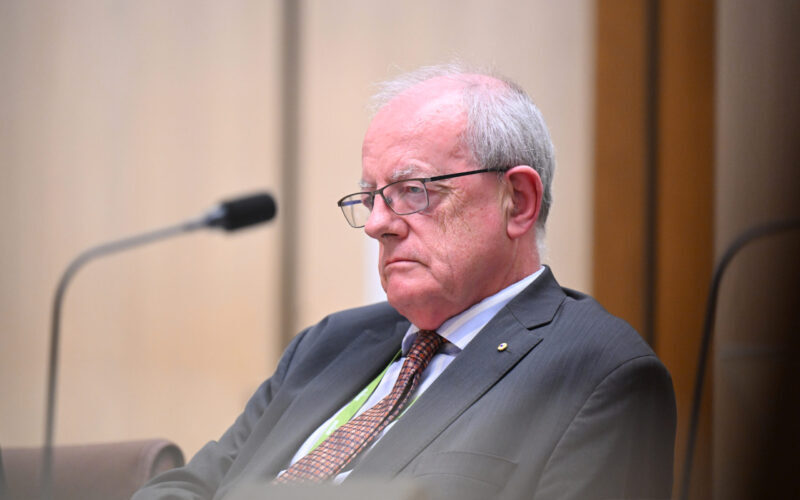
Commissioner of the National Anti-Corruption Commission (NACC) Paul Brereton speaks during inquiry into the National Anti-Corruption Commission Annual Report 2023-24 at Parliament House in Canberra, Friday, November 22, 2024. (AAP Image/Lukas Coch) NO ARCHIVING
UPDATE: Calls for NACC Commissioner Paul Brereton to resign are intensifying following damning accusations of misleading Parliament and failing to investigate key corruption referrals. This urgent situation raises critical questions about the integrity of the nation’s anti-corruption body.
Just announced, Senator David Shoebridge declared that Brereton’s continued leadership could severely undermine trust in the National Anti-Corruption Commission (NACC). The controversy erupted after the NACC chose not to investigate six individuals linked to the notorious Robodebt scandal, prompting widespread outrage and over 1,200 complaints from the public.
In a shocking June 2024 revelation, Brereton’s decision came just days after Catherine Holmes SC, the Royal Commissioner for Robodebt, described the scheme as an “extraordinary saga” of “venality, incompetence, and cowardice.” The failure of the NACC to pursue these investigations has led critics to argue that it reflects deeper issues within the organization.
In a brief media statement, Brereton claimed he had delegated the decision to avoid a potential conflict of interest. However, NACC Inspector Gail Furness SC later contested this, finding Brereton’s involvement to be “comprehensive” and his actions amounted to “officer misconduct.” This revelation adds to the growing pressure for his resignation.
During a parliamentary hearing on November 22, 2024, Brereton misled lawmakers about the nature of the referrals and downplayed the possibility of corrupt conduct. Furness was forced to correct him, stating that the referral indeed indicated that the conduct could meet the definition of corruption under the NACC Act—a significant contradiction to Brereton’s testimony.
Moreover, Brereton misrepresented legal advice from the NACC’s internal lawyers regarding the referrals. He altered the language from “would” to “could,” prompting further scrutiny of his truthfulness. Inspector Furness again had to clarify the misunderstanding, emphasizing the gravity of Brereton’s misrepresentation.
In another troubling incident, Brereton misled his own CEO, Phillip Reid, about his consulting activities with the Inspector-General of the Australian Defence Force (IGADF). Senator Shoebridge highlighted that Brereton had provided advice on at least 22 occasions, contrary to his claims of infrequency.
The public expects transparency and honesty from the head of the NACC, and the recent conduct of Brereton raises serious concerns about the integrity of the commission. As the atmosphere grows more charged, many are calling for immediate action.
Looking ahead, Brereton is scheduled to appear again before the Parliamentary Joint Committee on the NACC on December 11, 2024. This could be a pivotal moment for him to address these allegations directly and possibly step down. As the situation develops, stakeholders and the public will be watching closely.
The demand for accountability is clear: enough is enough. The integrity of Australia’s anti-corruption efforts hinges on swift and decisive action.
