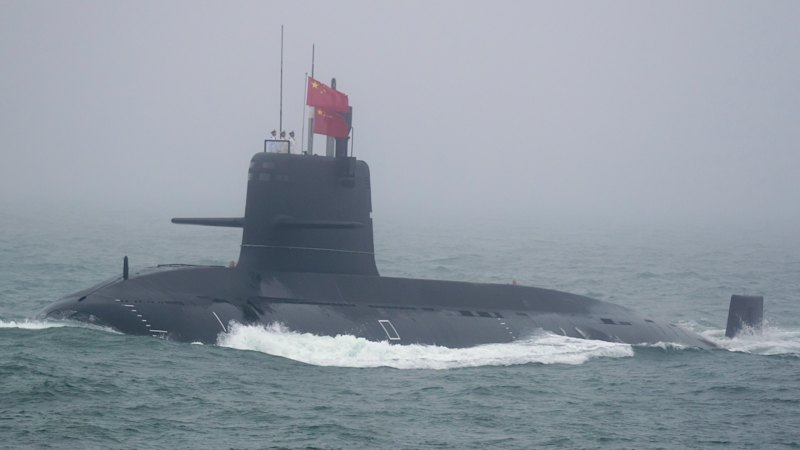
China has deployed more than 100 naval and coast guard vessels across East Asian waters, marking a significant escalation in military activity in the region. This deployment, reported by Reuters based on multiple security sources, spans from the southern part of the Yellow Sea through the East China Sea and into the contested South China Sea, as well as the Pacific Ocean. Defence experts view this as a record show of force, coinciding with a traditionally busy period in the People’s Liberation Army’s (PLA) annual training schedule.
Reports suggest that this concentration of vessels exceeds last December’s mass deployment, which led Taiwan to raise its military readiness. While the PLA has not announced any major military drills, the scale of this operation indicates a trend towards larger, more complex maritime task groups operating beyond China’s immediate coastal waters.
Strategic Implications and Regional Concerns
Defence analysts highlight a longer-term shift in China’s naval operations, extending activities from Alaska to the Red Sea. They assert that these movements are not only designed to enhance China’s military capabilities but also to test the responses of U.S. allies in the region. According to Jennifer Parker, an adjunct fellow in naval studies at the University of New South Wales, “This kind of increase is about applying economic and military coercion to allies of the U.S. and assessing their responses.”
The timing of this naval build-up coincides with upcoming discussions between Australian Defence Minister Richard Marles and his Japanese counterpart in Tokyo. Marles emphasized the strengthening relationship between Australia and Japan, stating, “Our relationship continues to grow from strength to strength.” This visit is part of broader efforts to enhance defence ties amid rising tensions in the region.
China’s military maneuvering has also escalated diplomatic tensions with Japan. Recent remarks from Japanese Prime Minister Sanae Takaichi suggested that a hypothetical attack by China on Taiwan could prompt a military response from Japan. These comments have drawn sharp rebukes from Beijing, which has halted Japanese seafood imports and issued travel advisories against Japan.
Ongoing Maritime Disputes
The situation is further complicated by ongoing maritime disputes, particularly near the contested Diaoyu/Senkaku Islands. Chinese and Japanese coast guard vessels have engaged in a series of confrontations, with conflicting accounts emerging from both sides regarding recent encounters. China claimed its coast guard took “necessary control measures” against a Japanese fishing boat, while Japan asserted that Chinese patrol ships were intercepted and directed away from the area.
This ongoing tension underscores the fragile state of relations between China and Japan, with Chinese vessels maintaining patrols that have stretched over 216 consecutive days this year. In response to the growing Chinese military presence, Japan’s Defence Minister Shinjiro Koizumi acknowledged the situation, stating that Japan is closely monitoring Chinese military movements.
As China continues to expand its naval capabilities, the implications for regional security are becoming increasingly significant. The international community, particularly U.S. allies, will need to navigate this evolving landscape with caution as tensions in East Asia persist.