




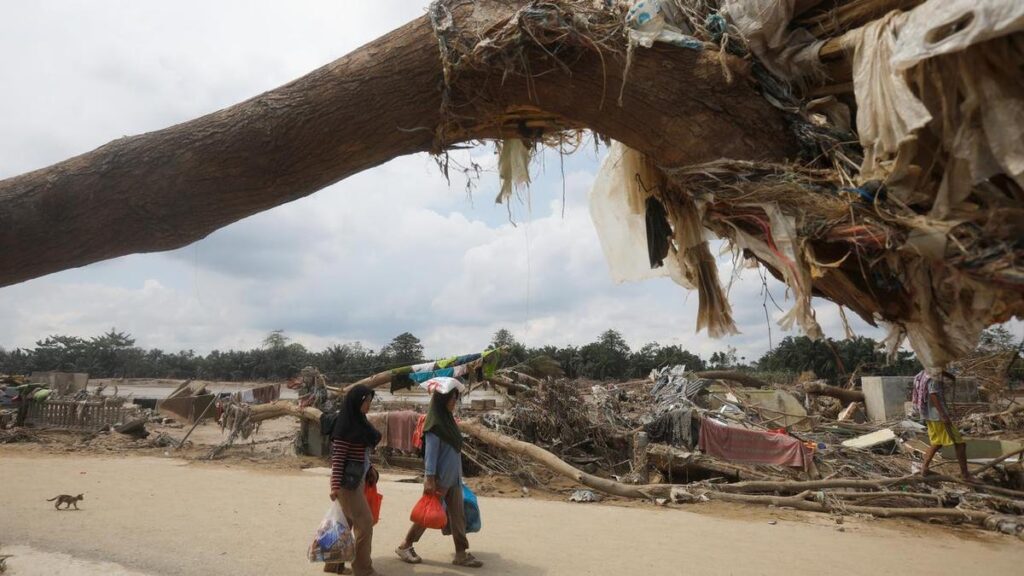
UPDATE: Emergency crews are racing against time as catastrophic floods and landslides wreak havoc across Asia, claiming the lives of over 1,500 people. Relief operations are underway, but the overwhelming scale of need is crippling rescue efforts in the most affected areas.
Authorities confirm that 867 deaths have been reported in Indonesia, 486 in Sri Lanka, and 185 in Thailand, with additional fatalities in Malaysia. Nearly 900 people remain unaccounted for in Indonesia and Sri Lanka, while recovery efforts have progressed more swiftly in Thailand and Malaysia.
As floodwaters recede, survivors face dire conditions with essential infrastructure severely damaged. Roads connecting cities have been severed, leaving many regions accessible only by helicopter. In Aceh Tamiang, the epicenter of devastation in Aceh province, entire villages lie buried under mud, impacting over 260,000 residents who have fled their homes.
With wells contaminated and water pipes shattered, clean water is a luxury. The stench of decay permeates the air, and food is scarce. Helicopters have begun delivering crucial supplies—food, medicine, and blankets—to isolated communities, where clean water and sanitation are urgent priorities.
Trucks transporting relief supplies have resumed operations along the roads from North Sumatra’s Medan city to Aceh Tamiang, but distribution is hampered by debris. National Disaster Management Agency spokesperson Abdul Muhari reported that the roads reopened almost a week after the disaster, yet challenges persist.
Television coverage reveals widespread destruction in Aceh Tamiang, where two hospitals and 15 community health centers remain inactive. Medical teams are improvising in crowded shelters, grappling with shortages of medicine and staff as the threat of waterborne diseases looms large.
Families cling to survival on a battered bridge spanning the swollen Tamiang River. One survivor, Vira, broke down in tears during a television interview, stating, “We have nothing left. We drank floodwater from discarded bottles and scavenged for scraps… whatever the current carried to us.”
Another resident, Angga, described the harrowing experience of clinging to the tin roof of a collapsed building with 13 relatives and neighbors for four nights. “Even now, eight days after the floods erased our village, no aid has reached us—no helicopters, no rescue teams,” Angga lamented. “We had no choice but to drink the very water that destroyed our homes.”
As the situation continues to worsen, the urgency for aid and relief grows stronger. Authorities are calling for immediate assistance to address the mounting humanitarian crisis, highlighting the critical need for clean water, food, and medical supplies.
The world watches as Asia grapples with this unprecedented disaster, and the plight of its survivors underscores the need for global solidarity and support in the face of adversity.
