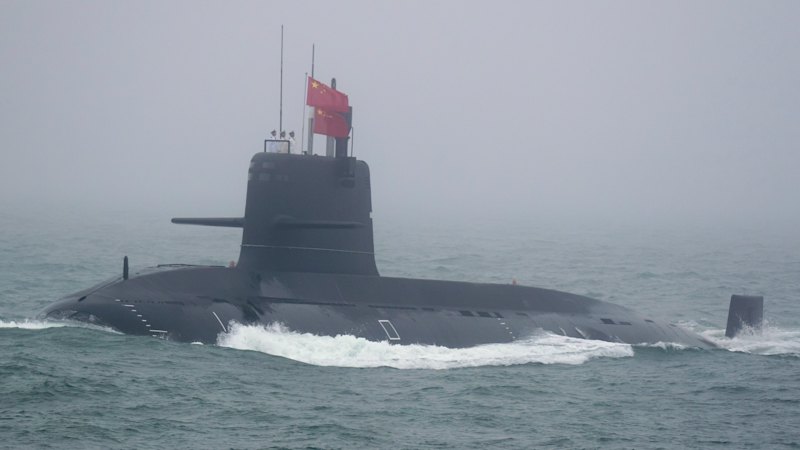
China has deployed more than 100 naval and coast guard vessels across East Asian waters, marking a record concentration of military assets amid escalating regional tensions. Reports indicate that these ships are positioned in areas stretching from the southern Yellow Sea to the contested South China Sea and into the Pacific Ocean. This large-scale mobilization is viewed by defense experts as a clear indication of Beijing’s ongoing military expansion.
According to Reuters, multiple security officials revealed this week that the deployment represents the most significant show of force from China to date. The exact nature of the deployment remains unclear, particularly whether it includes a naval flotilla being tracked by the Australian Defence Force. This concentration of vessels coincides with what is typically one of the busiest periods in the People’s Liberation Army (PLA) training calendar, although no major exercises have been publicly announced.
Strategic Implications of China’s Naval Activities
Defense analysts are observing a broader trend where China routinely operates larger and more complex task groups beyond its coastal waters. Jennifer Parker, an adjunct fellow in naval studies at the University of New South Wales, stated, “Is this particular deployment significant? No. Is it part of a general trend of China expanding and becoming more confident with its navy? Yes.” Parker anticipates that such deployments will increase year-on-year as China seeks to leverage its expanding military capabilities to achieve its geopolitical objectives.
She emphasized that China’s naval and coast guard forces are now active in more regions and with more sophisticated formations than ever before, exploiting perceived distractions within the United States related to crises in Venezuela, Russia, and Ukraine. This pattern of behavior is seen as a means of applying economic and military pressure on U.S. allies, a development that Australia and others must monitor closely.
The increase in naval activity comes as Australia’s Defence Minister Richard Marles prepares to visit Tokyo this weekend for discussions with his Japanese counterpart regarding strengthened defense ties. In a statement prior to his trip, Marles remarked, “Our relationship with Japan continues to grow from strength to strength—underpinned by close strategic alignment, mutual ambition, and enormous potential.”
Heightened Tensions with Japan
China’s naval deployments occur against a backdrop of rising tensions between Beijing and Tokyo, particularly following comments from Japanese Prime Minister Sanae Takaichi. Takaichi suggested that a hypothetical Chinese attack on Taiwan could prompt a military response from Japan. This statement has drawn sharp criticism from Beijing, which has used it as justification for halting seafood imports from Japan and has issued travel warnings against its citizens.
The dispute has also intensified around the Diaoyu/Senkaku Islands, where a recent encounter between Chinese and Japanese coast guard vessels sparked conflicting reports. China asserted that its coast guard acted to drive away a Japanese fishing boat from what it claims are its territorial waters. Conversely, Japan stated that its patrols had intercepted Chinese vessels off course.
The territorial waters surrounding these islands have long been a flashpoint, with Chinese ships maintaining record-length patrols—over 216 consecutive days this year—leading to routine confrontations. In response to queries about Chinese military activities in the East China Sea, Japanese Defence Minister Shinjiro Koizumi stated that Japan is closely monitoring these developments, maintaining vigilance without commenting specifically on the latest deployments.
As military tensions escalate in the region, the implications for international relations and regional security remain critical. Both nations are navigating a delicate balance of power that will likely influence the strategic landscape in East Asia for the foreseeable future.