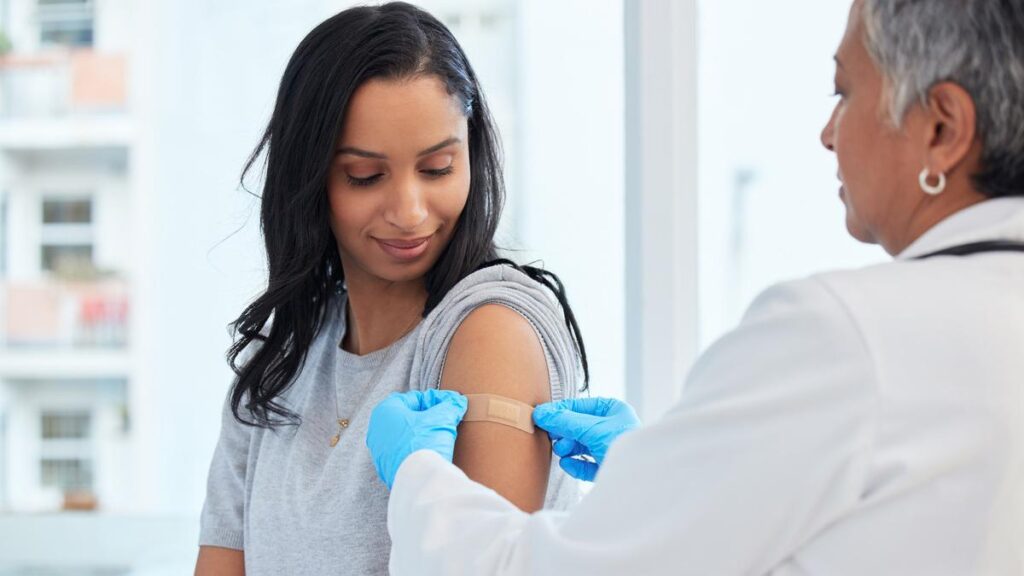
Healthcare, woman and doctor with plaster, vaccination and consultation in a hospital, cure and disease. Female patient, client and medical professional with care, vaccine and injection for safety.
A significant study has revealed that individuals with dementia who received the shingles vaccine, Merck’s Zostavax, showed a notably reduced risk of death from dementia compared to those who did not receive the vaccine. Conducted on a large cohort of over 14,000 seniors in Wales, the findings suggest that the vaccine may not only delay the onset of dementia but also potentially slow its progression in those already diagnosed.
During a nine-year follow-up period, nearly half of the participants with dementia passed away from the condition. However, the study indicated that receiving the Zostavax vaccine lowered the risk of death from dementia by nearly 30 percentage points. This adds to earlier research from Wales which showed that older adults vaccinated with Zostavax were 20 percent less likely to develop dementia in the first place compared to their unvaccinated peers.
Implications for Dementia Treatment
The study’s lead researcher, Pascal Geldsetzer from Stanford University, expressed enthusiasm about the implications of these findings. “The most exciting part is that this really suggests the shingles vaccine doesn’t have only preventive, delaying benefits for dementia, but also therapeutic potential for those who already have dementia,” he stated.
While the precise mechanism by which the shingles vaccine may provide this protective effect remains unclear, researchers are exploring several possibilities. They speculate that the vaccine could enhance overall immune response, reduce reactivations of the varicella-zoster virus that causes shingles, or operate through another yet-to-be-identified method.
Moreover, researchers are investigating whether the newer shingles vaccine, Shingrix, produced by GlaxoSmithKline, could offer similar or even greater benefits for dementia. Shingrix, which contains only specific proteins from the virus and has demonstrated superior efficacy in preventing shingles, may be a key player in this ongoing research.
Global Research Findings
As the study’s findings gain traction, researchers have noted the same protective signal for dementia in health records from other countries, including England, Australia, New Zealand, and Canada. Over the past two years, researchers have replicated the Welsh findings across multiple datasets, reinforcing the potential link between shingles vaccination and reduced dementia risk.
Dr. Geldsetzer emphasized this repeating pattern, stating, “We just keep seeing this strong protective signal for dementia in dataset after dataset.” These results could pave the way for new avenues in dementia treatment and prevention strategies, underscoring the importance of vaccination in older populations.
As discussions about effective interventions for dementia continue, the implications of these findings could prove vital in shaping future healthcare policies and practices related to vaccination and dementia management.