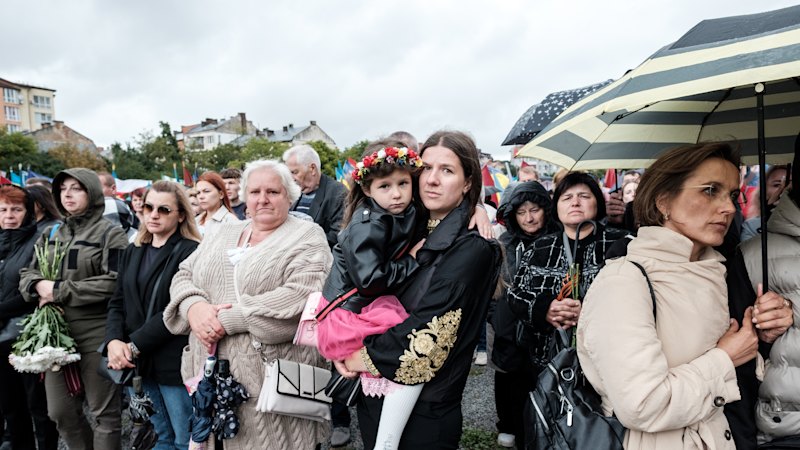
In the city of Lviv, Ukraine, daily life unfolds against the backdrop of an unrelenting war. Residents experience a stark juxtaposition of celebrations and mourning, with weddings and funerals occurring side by side. As they navigate their bustling streets, the threat of missile strikes looms overhead. “This is the craziness,” says Elizabeth Dotsenko, a family physician, reflecting on the surreal nature of life in a war-torn city.
Despite the chaos, Lviv’s residents have adapted to their new reality. On a foggy weekday morning, the roads are congested as if in any other European city, with cafes filled with patrons enjoying their morning beverages. Yet, each day at 09:00, life pauses for a moment of silence to honor those who have lost their lives due to the conflict. This ritual underscores the pervasive impact of the war, as families cope with loss and fear.
Olha Ortynska, a doctor and the executive director of the Ukrainian Catholic University Medical Clinic, highlights the profound changes the war has wrought on every household. “Every family is changed by the war,” she states, noting that nearly everyone knows someone who has been killed, displaced, or is currently serving in the military. The uncertainty of future missile strikes adds to the collective anxiety, prompting many to question how much longer they can endure this conflict.
The Ukrainian Catholic University Medical Clinic, where Ortynska and Dotsenko work, stands as a beacon of hope and necessity in a health system strained by war. The facility provides specialized care for veterans and civilians alike, including those who have suffered serious injuries from military attacks. Funded entirely by the university and its donors, this center represents a growing need for medical support amidst a surge in casualties both on the front lines and among civilians.
“All the time, we feel we have these tragedies in our lives,” Ortynska explains. She emphasizes a deep desire for peace and the normalcy that comes with it, reflecting a sentiment shared by many Ukrainians. The challenges of daily life are compounded by the ongoing war, which many believe could be resolved if Ukraine were to concede to the demands of Russian President Vladimir Putin. These demands include the transfer of territories such as Crimea and parts of Luhansk and Donetsk, alongside restrictions on Ukraine’s military capabilities.
In discussions surrounding peace negotiations, Dotsenko voices a common concern among Ukrainians: “Going for the compromise, we would lose our freedom. Those 28 points are just giving up.” This sentiment is echoed throughout the country, where people remain skeptical of the possibility of a fair resolution, fearing that Russia will always seek to reclaim lost territory.
While some soldiers returning from the front are weary and uncertain about the prospect of victory, others fear that the ongoing corruption scandals within the Ukrainian government are eroding trust in leadership. As Ukrainian President Volodymyr Zelensky navigates these tumultuous waters, he faces mounting pressure, both domestically and internationally.
The impact of the war is staggering. According to United Nations estimates, at least 14,383 civilians have been killed since the full-scale invasion began in February 2022, including 738 children. Military losses are also severe, with Zelensky reporting that approximately 43,000 Ukrainian soldiers have died in the conflict.
As residents grapple with the emotional toll of loss, the memory of the deceased permeates daily life. Ortynska recalls a close friend, Mykola, who lost his life while serving. The pain of remembering those who have fallen underscores the resilience of those still living.
Despite the horror of war, Ukrainians find ways to connect and support one another. Community events, such as concerts and volunteer activities, continue to thrive, demonstrating their determination to preserve a sense of normalcy. Even amidst air raid alerts, the spirit of camaraderie remains strong, as people gather in shelters, sharing moments of silence and solidarity.
Oleh Biliansky, director of the Unbroken centre in Lviv, notes a significant increase in civilian illnesses, including stress-related conditions, over the past two years. The centre serves as a vital resource, offering rehabilitation for those affected by both physical injuries and psychological trauma. “We don’t have any choice. We have to continue to fight,” he asserts, echoing the sentiments of many who believe in the importance of resilience.
As the conflict continues, the Ukrainian people remain steadfast in their hope for peace and recovery. Initiatives to support mental health have gained momentum, with programs aimed at fostering community connections and resilience. First Lady Olena Zelenska has spearheaded efforts to create support centres, encouraging a culture of empathy and understanding among the populace.
The ongoing conflict has undoubtedly reshaped Lviv and its residents, but their spirit remains unbroken. As they remember the fallen with gratitude and resolve, they hold onto the belief that they will emerge from this war stronger and united.