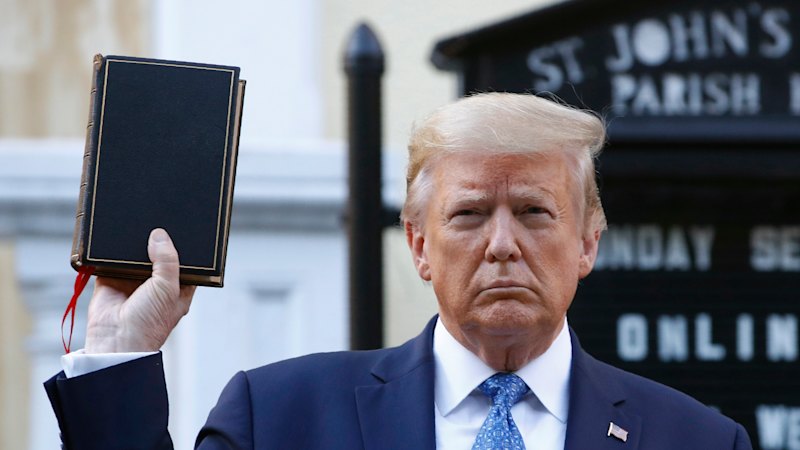
The role of Christianity in the Trump administration has sparked significant debate, particularly in light of concerns regarding the rise of “Christian nationalism.” Despite expectations that President Donald Trump would prioritize Christian values in U.S. policy, the reality presents a more nuanced picture.
Many anticipated that Trump would create policies reflective of evangelical beliefs, especially following his election in 2016 with substantial support from Christian voters. However, data suggests that the presence and influence of Christianity within his administration have not been as pronounced as some predicted.
Policy Decisions and Religious Influence
Trump’s tenure has been marked by a series of contentious policy decisions that often overshadow religious considerations. For instance, his administration has focused primarily on issues like immigration reform and economic policy, rather than explicitly promoting Christian doctrines. Notably, initiatives that align with the interests of evangelical groups, such as the appointment of conservative judges, have occurred, yet the broader narrative of Christian nationalism has not been a central theme.
According to a 2019 report from the Pew Research Center, the percentage of Americans identifying as Christian continues to decline, which reflects changing demographics and cultural shifts. This trend poses challenges for any administration seeking to align closely with Christian values. The report highlights that only about 65% of U.S. adults identified as Christians in 2019, down from 77% in 2009.
Evangelical Leaders and the Administration
While many evangelical leaders initially supported Trump, their influence within the administration appears limited. Some prominent figures, such as Franklin Graham and Jerry Falwell Jr., have voiced support for Trump’s policies, but they have not consistently shaped the administration’s agenda. This raises questions about the effectiveness of religious leadership in engaging with national politics.
In the 2020 election, Trump’s support among evangelicals remained strong. Approximately 76% of white evangelical voters cast their ballots for him, according to exit polls. Still, this support did not translate into a significant increase in overtly Christian policies or rhetoric during his presidency.
The divide between the expectations of Christian nationalists and the reality of political outcomes has led to a reevaluation of what it means to have faith in political leadership. The complexities of governance often conflict with the ideals held by religious groups, leading to disillusionment among some supporters.
As the Trump administration faces scrutiny over its policies and the effectiveness of its engagement with Christian communities, the broader implications for American Christianity remain to be seen. The evolving landscape suggests that while Christianity may still hold influence in certain circles, its role in shaping national policy under Trump has not been as dominant as some had anticipated.
In summary, the Trump administration’s approach to Christianity highlights the challenges of intertwining faith with political governance. The administration’s focus on issues beyond religious doctrine reflects a broader trend within American society, where the influence of Christianity is gradually diminishing in the political arena.