The National Disability Insurance Scheme (NDIS) in Australia faces significant challenges in providing adequate support for individuals with psychosocial disabilities, which stem from mental health conditions. A recent report from the Grattan Institute highlights the pressing need for reform to ensure that those who do not qualify for individual NDIS funding still receive essential support.
The current landscape is marred by a lack of agreement between federal and state governments regarding the funding and responsibilities associated with “foundational supports.” These supports are critical for individuals who do not meet NDIS eligibility criteria, particularly those living with conditions such as schizophrenia, major depression, or post-traumatic stress disorder.
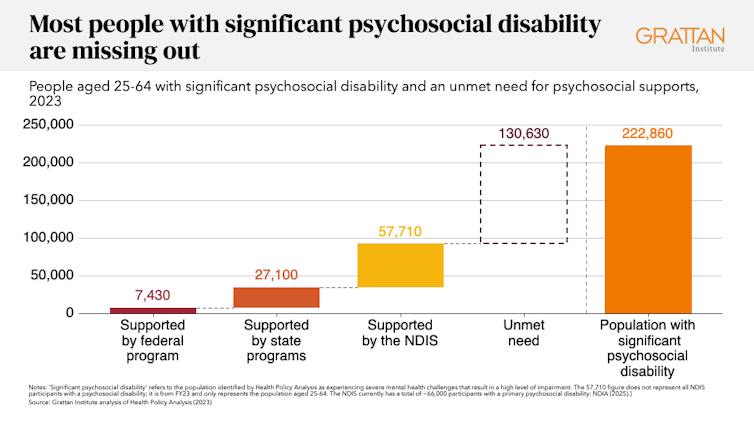
While the federal government has initiated some progress, notably through the Thriving Kids initiative aimed at children with developmental delays and autism, there remains a significant gap in support for adults with psychosocial disabilities. As of 2023, approximately 223,000 Australians aged 25 to 64 experience significant psychosocial disability, yet less than 58,000 of them receive support from the NDIS. The scheme allocated more than A$5.8 billion in the past year to assist this group, leaving around 130,000 adults without any support.
Understanding Psychosocial Support Needs
Psychosocial supports encompass non-clinical services designed to help individuals manage mental health challenges and lead fulfilling, independent lives within their communities. These services include programs that foster social connections, teach essential skills, and assist with stable housing.
The absence of adequate psychosocial support has far-reaching consequences, including diminished quality of life, limited opportunities for community engagement, and lost productivity. Alarmingly, nearly 60% of adults with significant psychosocial disabilities report unmet needs, a situation that underscores the inadequacy of current support systems.
Government-funded psychosocial programs are fragmented across various state and territory mental health systems, resulting in inconsistencies in service delivery. The report reveals a dramatic disparity in access to support, with a seven-fold difference between states such as Queensland, which offers the highest coverage, and Tasmania, where support is minimal.
A National Program for Equitable Support
The Grattan Institute proposes a cohesive national program for psychosocial supports, grounded in evidence-based practices. Key components of this program would include support facilitation to guide individuals through their mental health journeys, community participation initiatives, and family education to empower families in supporting their loved ones.
The proposal advocates for the involvement of Primary Health Networks (PHNs), which are currently responsible for planning local health services. By commissioning psychosocial supports in collaboration with local providers and organizations, PHNs can help create a more consistent and equitable framework across the nation.
This new approach would not replace the NDIS but rather complement it. A flexible system would allow individuals to transition between NDIS supports and lower-intensity psychosocial services as their needs change. The introduction of “zero-dollar plans” would enable individuals to remain within the NDIS framework without active funding, ensuring their eligibility remains intact should their circumstances evolve.
The report emphasizes that this reform does not need additional funding. Instead, it suggests that governments can leverage existing NDIS funding to create a new program focused on psychosocial supports. By reallocating resources away from ineffective programs, governments can better meet the needs of Australians living with significant psychosocial disabilities.
As Australia continues to navigate the complexities of disability support, the Grattan Institute’s recommendations provide a clear pathway to a more equitable system. The need for action is urgent, as the current delay in establishing foundational supports has left many vulnerable individuals without the assistance they desperately require.