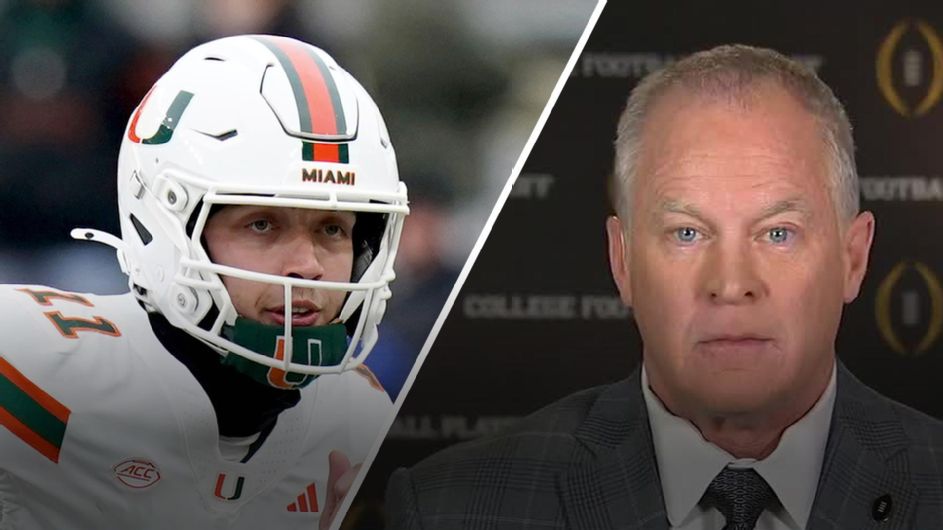
The College Football Playoff (CFP) selection process has drawn significant attention, especially following the Miami Hurricanes’ successful playoff bid this season. Miami, with a record of 10-2, secured a spot in the playoffs after defeating the Notre Dame Fighting Irish, who have opted out of bowl season to focus on future championships. This unexpected turn of events has led to reflections from Miami’s head coach, Mario Cristobal, who previously worked under renowned coach Nick Saban at Alabama.
Cristobal recalled a memorable lesson from Saban regarding the challenges of coaching. He quoted Saban as saying, “If you want to make everybody happy, don’t coach and get involved in football. Go sell ice cream, because the ice cream man makes everybody happy.” Cristobal emphasized the reality of the sport, stating that in football, not everyone can be satisfied with the outcome.
The CFP committee faced scrutiny over its decisions, particularly regarding Miami and Notre Dame. After a comprehensive review, committee chair Hunter Yurachek noted Miami’s performance in their season-opening victory against Notre Dame, which ultimately influenced the committee’s choice for the final at-large playoff spot. “There was observation from the coaches in the room where Notre Dame did a lot of chasing of some of the athletic receivers, especially on the Miami side,” Yurachek explained. “It just felt like there was a little bit more athleticism on the side of Miami versus Notre Dame.”
For Notre Dame, the disappointment was palpable. The Irish have chosen to decline bowl invitations, redirecting their focus toward a national championship bid in 2026. Cristobal acknowledged the challenges faced by teams in this competitive environment, saying, “It’s a tough business, man. It’s a really, really tough business. I respect everybody and everyone involved in it.”
The CFP selection process has been a topic of debate, particularly regarding the tiebreaker rules that impacted Miami’s chance to compete in the Atlantic Coast Conference (ACC) title game. This season’s tiebreaker left many questioning the fairness of the system, given that Miami had been ranked higher than Notre Dame throughout the season. The CFP committee clarified that their evaluations shifted when comparing the two teams directly, which explains the final decision.
Looking ahead, changes to the CFP process seem inevitable. Under a memorandum of understanding signed last year, starting in 2026, the field will expand to at least 12 teams, ensuring a place for teams finishing in the top 12. Additionally, a deal finalized in March guarantees playoff spots for conference champions in the ACC, Big Ten, SEC, and Big 12, along with the highest-ranked Group of 5 champion.
Cristobal expressed his understanding of the complexities involved in decision-making within the sport. “It’s a hard job. It’s a tough industry, right? I mean, where else are so many variables so influential in the outcome of a game that could send teams in a death spiral or propel others to new heights?” He acknowledged the impact of human error, officiating, and injuries on the game, emphasizing the need for a fair evaluation process.
Had the CFP not extended an invitation to Miami, the team would have likely settled for a berth in the Gator Bowl, a game that many players might have chosen to skip in preparation for the upcoming NFL draft. This scenario reflects a broader issue within college football, where bowl games often lose their appeal when teams are not contending for the playoffs.
Cristobal concluded with optimism about the future of college football, stating, “The passion behind college football is at an all-time high. With all the chaos in college football right now, I’m glad that we didn’t punish the student athletes who actually laid it on the line—on the field.” The ongoing evolution of the CFP promises to keep fans engaged as the landscape of college football continues to shift.