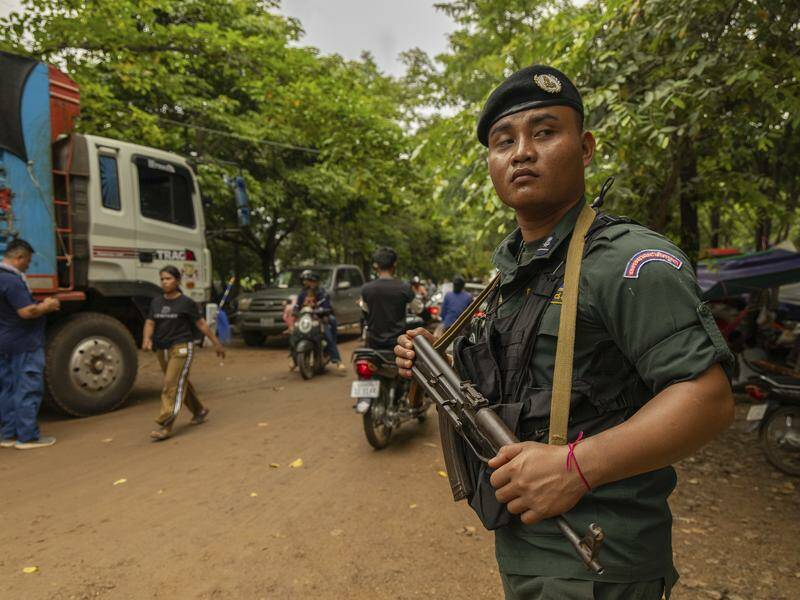
Fighting between Thailand and Cambodia has intensified along their contested border, with both nations asserting their commitment to defend their sovereignty. The renewed clashes, which began on Monday, have raised concerns about the viability of a fragile ceasefire brokered by US President Donald Trump in July 2023.
Each side has blamed the other for reigniting hostilities, complicating efforts to restore peace. Hun Sen, Cambodia’s former prime minister, stated that his government had waited 24 hours to honor the ceasefire and facilitate evacuations before conducting counterattacks against Thai forces. “Cambodia needs peace, but Cambodia is compelled to counterattack to defend our territory,” he declared in a Facebook post on Tuesday. He emphasized that Cambodia’s military advantages, including strong bunkers and advanced weaponry, positioned them favorably against what he termed an “invading enemy.”
In Thailand, military officials reported clashes across five border provinces, particularly in Trat Province, where a navy-led operation aimed at expelling Cambodian soldiers was underway. According to Thai sources, Cambodia has employed artillery, rocket launchers, and bomb-dropping drones in its assaults on Thai positions. “Thailand is determined to defend its sovereignty and territorial integrity, and therefore military measures must be taken as necessary,” stated Rear Admiral Surasant Kongsiri, Thailand’s Defence Ministry spokesperson, during a media briefing.
The conflict has resulted in significant casualties on both sides. The Cambodian Defence Ministry accused Thailand of “brutal and unlawful actions,” reporting that nine civilians have died and 20 others were injured since Monday. In contrast, Thai officials confirmed the deaths of three soldiers and 29 injuries amidst the fighting. Hun Manet, the Cambodian Prime Minister and son of Hun Sen, warned that Thailand “must not use military force to attack civilian villages under the pretext of reclaiming its sovereignty.”
As tensions escalate, both countries have taken measures to evacuate hundreds of thousands of people from border areas. The current situation marks a significant deterioration in relations, following a period of relative calm since the ceasefire in July 2023, when at least 48 people were killed and 300,000 displaced during a five-day exchange of heavy artillery and rocket fire.
Historical grievances between Thailand and Cambodia have fueled these conflicts, particularly over undemarcated points along their approximately 800 km land border. Disputes over ancient temples have often stirred nationalist sentiments, leading to military confrontations, including a deadly artillery exchange in 2011.
Since November, tensions have simmered after Thailand suspended de-escalation measures agreed upon during Trump’s summit following a landmine incident that resulted in injuries to a Thai soldier. The latest clashes are the fiercest since July, raising alarms over the potential for further escalation in a region that has experienced a turbulent history marked by military confrontations and diplomatic breakdowns.
As both nations navigate this precarious situation, the potential for broader conflict looms, drawing international attention to the enduring disputes that have long characterized their bilateral relations.