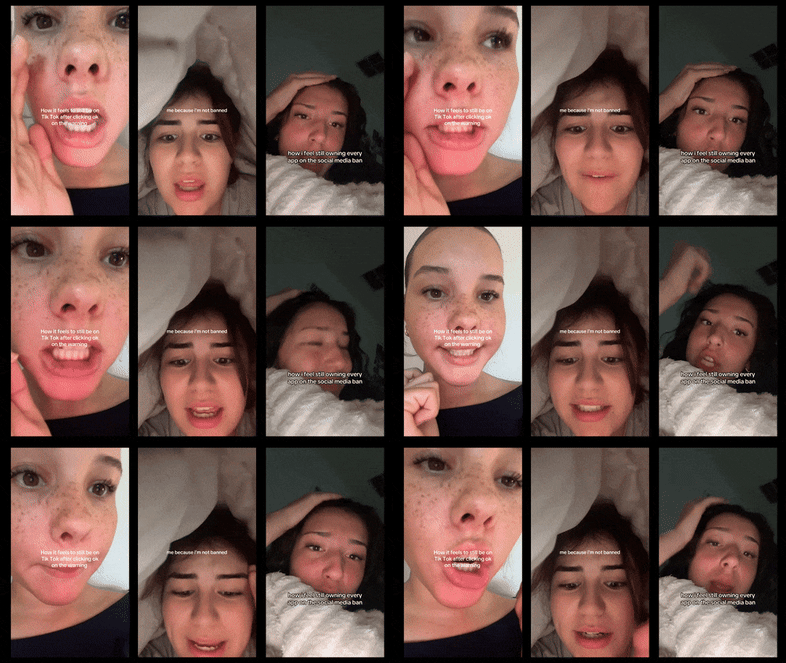
Children in Australia are finding ways to bypass a new social media ban, which has led to the deactivation of over 200,000 TikTok accounts belonging to users believed to be under 16 years old. The ban, initiated by Communications Minister Anika Wells, aims to protect younger users from the potential harms of these platforms. Despite this, many children are bragging online about their continued access to prohibited platforms, showcasing a significant challenge in enforcing the new regulations.
Within hours of the ban’s implementation, reports indicated that while some children discovered their accounts had been disabled, others continued using TikTok and other social media apps without interruption. Users posted videos claiming they had successfully circumvented the ban, with one TikTok user directly addressing Prime Minister Anthony Albanese: “Dear Anthony Albanese, I got past your ban.” Comments flooded in from others asserting their status as underage users still active on the platform, often timestamping their “victory” moments.
The effectiveness of the ban is already being called into question. Julie Inman Grant, the eSafety Commissioner, acknowledged that technology limitations might impede immediate compliance. “There are going to be technology teething issues,” Inman Grant stated in an interview, emphasizing that not all underage users would be removed instantly. The age-assurance methods currently in place have been criticized for their potential biases and inaccuracies, particularly regarding facial recognition technologies.
The legislation stipulates that children circumventing the ban will not face penalties, placing the onus on social media platforms to enforce age restrictions. Non-compliance carries substantial financial implications, with fines reaching up to $49.5 million for offending companies. Inman Grant noted that platforms are expected to detect the use of virtual private networks (VPNs), which can mask a user’s location and age.
While many children are finding loopholes, others have migrated to alternative social media platforms such as Lemon8, Yope, and Coverstar, which are not included on the eSafety Commissioner’s list of age-restricted platforms. These apps have surged in popularity among underage users seeking a semblance of normalcy in their online interactions. Wells remarked on the need to monitor these migratory patterns, stating, “If we find that because they’ve been logged out of Snapchat, Instagram, TikTok, they end up on Lemon8, then we will look at whether the harm has transferred there.”
As the Australian government navigates the complexities of social media regulation, the initial results of this ban highlight the challenges of effectively shielding young users from potential risks. The ongoing situation reveals a pressing need for more robust age verification methods, while also raising questions about the broader implications of such restrictions on social media engagement among children.