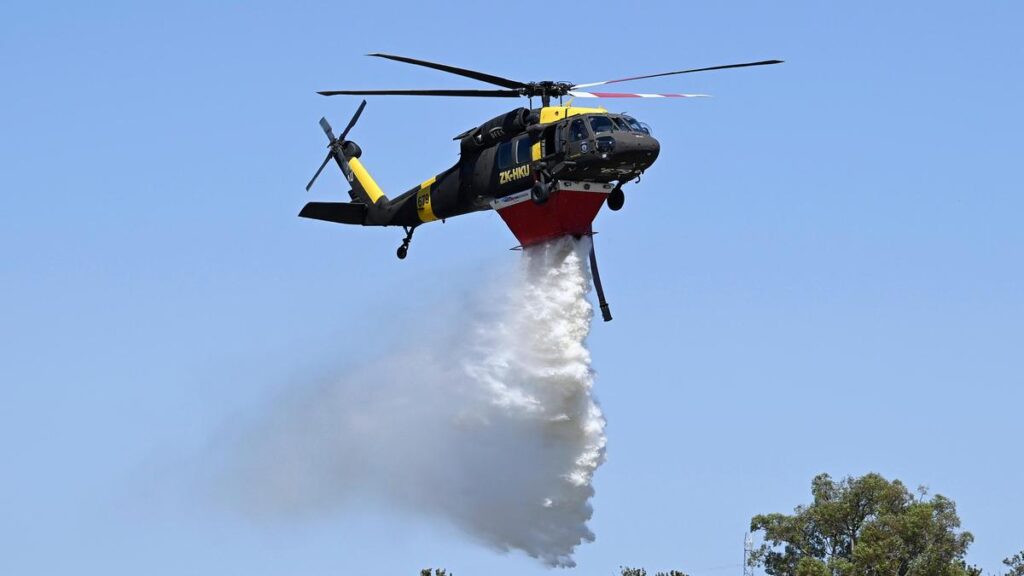
The Cook Government has announced a substantial funding increase of $14 million to enhance Western Australia’s aerial firefighting capabilities. This investment will extend the operation of two additional Black Hawk helicopters through to the end of the 2028-29 fire season. These helicopters will be stationed at Gingin, located 67 km north of Perth, and are expected to play a crucial role in managing bushfire challenges during the summer months.
Previously, the Black Hawk helicopters were secured for two seasons with an initial funding of $10.1 million. Known for their resilience, these helicopters can refill with 4,500 litres of water in just 35 seconds, making them an invaluable asset in firefighting efforts. With this new funding, Western Australia will maintain a total of four Black Hawk helicopters within its fleet, which consists of 38 aerial firefighting units that will be fully operational by December 20.
Emergency Services Minister Paul Papalia expressed satisfaction with the acquisition, highlighting its importance to the state’s firefighting arsenal. “We are delighted to have secured the extra set of Black Hawk helicopters for the next three years,” he stated. “WA is the largest emergency management jurisdiction in the southern hemisphere, and having such an agile and effective aerial fleet will provide a major boost to our firefighting efforts to keep the community safe.”
The Black Hawk helicopters will complement the C130 Hercules LAT, which was introduced in the 2022-23 summer season. This aircraft has been operational since early December and is expected to remain in Western Australia for a minimum of 90 days. Fire and Emergency Services Commissioner Darren Klemm emphasized the helicopters’ critical role in supporting ground crews, particularly in challenging terrains and during intense fire conditions.
“The aerial fleet plays a vital role in supporting our dedicated crews on the ground, particularly when fires break out in difficult, inaccessible terrain or are burning too intensely for direct attack,” Klemm said. He urged residents to contribute to firefighting efforts by preparing their bushfire plans and utilizing the Emergency WA app.
As the southern bushfire season progresses, the 38-strong aerial fleet will be on standby daily, ready to respond to emergencies across the region. The expanded capabilities afforded by the additional funding aim to bolster community safety and enhance the responsiveness of Western Australia’s firefighting resources.