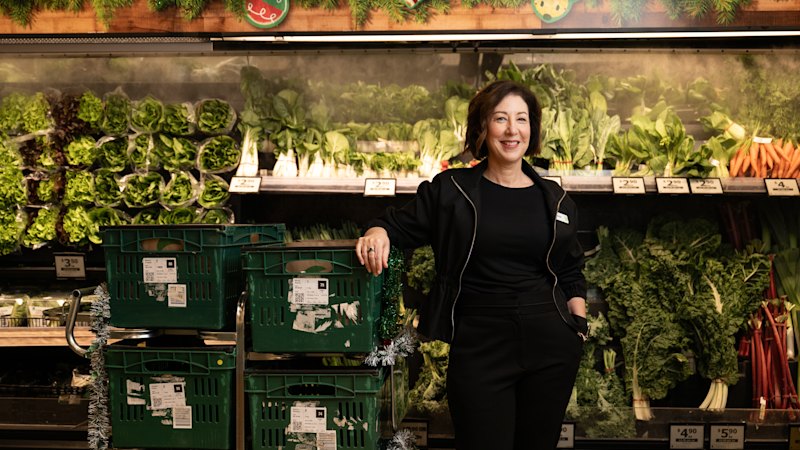
In September 2024, Amanda Bardwell made history by becoming the first female chief executive of Woolworths, Australia’s largest supermarket chain. Her appointment followed a period of significant transformation within the company, particularly in its e-commerce sector, where she had previously led substantial advancements. However, Bardwell’s initial months in office have posed considerable challenges as the retailer grapples with declining trust and financial performance.
Bardwell first gained recognition from the Woolworths board during a 2019 tour of American retailers, where her leadership of the supermarket’s digital and loyalty division, known as WooliesX, came into focus. The division, which she helped grow from an $800 million operation to a powerhouse generating $7 billion in sales, showcased her ability to innovate and adapt. The COVID-19 pandemic further highlighted the importance of these digital efforts, cementing her reputation as a forward-thinking leader.
Despite her promising track record, Bardwell’s tenure has encountered turbulence. Following the pandemic, Woolworths faced scrutiny from politicians and consumers who accused the supermarket of exploiting shoppers amid rising prices. As a result, the brand experienced a significant downturn in trust, prompting concerns about its market position. In contrast, competitor Coles has flourished under new leadership, with its shares increasing by approximately 15 percent over the past year, while Woolworths’ shares fell by 3 percent.
Bardwell’s first year has also been marked by operational challenges, including a 17 percent decline in profits and major losses within the discount department store Big W. In response, she implemented cost reductions amounting to $400 million and announced a $100 million reduction in margins on home-brand products. “We need to continue to lower shelf prices,” Bardwell stated, emphasizing the necessity for fair and consistent pricing that customers can rely on.
Bardwell is undertaking a significant infrastructure project with a planned investment of $1.27 billion in a new distribution centre in Sydney’s west, aiming to streamline operations and reduce costs. Steve Greentree, a former director at Woolworths, commended Bardwell for her determination to make difficult decisions, highlighting her commitment to the company’s success.
Despite her proactive measures, Bardwell’s leadership style has drawn mixed reactions. Some observers note her introverted nature and her cautious decision-making process. Investors are eager for a more comprehensive strategy, as Bardwell has yet to outline her long-term vision for the company. She anticipates hosting a strategy day for investors next year, marking the first such event since 2015.
Investor confidence remains fragile. AustralianSuper, the country’s largest retirement fund, recently sold off a holding worth around $420 million. Dion Hershan, head of Australian equities at Yarra Capital Management, remarked that Woolworths faces a daunting task in regaining market share from Coles. He noted that the supermarket’s lack of bold moves could hinder its recovery efforts.
In the three months leading to the end of September, Coles’ sales grew at more than double the rate of Woolworths’ Australian supermarkets. As the critical Christmas trading period approaches, Bardwell’s leadership will be put to the test. In an effort to enhance sales, she has appointed Peter McNamara from WooliesX to oversee grocery operations, focusing on sales growth through promotions.
Analysts are closely monitoring Woolworths’ ability to close the sales gap with Coles. While Bardwell has introduced initiatives aimed at quick wins in high-turnover categories, investors are wary of the company’s long-term strategy. Following a series of profit downgrades, concerns regarding future earnings have further strained investor perceptions of Woolworths.
At a store in Kellyville Grove, Bardwell demonstrated a new digital trolley designed to enhance customer experience. This innovation allows shoppers to scan items and pay directly on the device, facilitating a more efficient shopping process. Despite the positive feedback from some customers, Bardwell has faced backlash over Woolworths’ pricing strategies and allegations of price gouging.
The Australian Competition and Consumer Commission has been examining whether Woolworths and Coles have set excessively high margins, although a recent report found no evidence of price gouging. Still, the regulator has initiated legal action against both companies, claiming misleading advertising practices related to discounts.
Bardwell acknowledges the difficulties faced by the company and emphasizes the need for a renewed focus on customer relationships and operational efficiency. “It’s about getting back to the basics,” she stated, expressing optimism for the future. Her commitment to maintaining close ties with both customers and employees reflects her understanding of the challenges ahead.
As Woolworths navigates its current landscape, Bardwell’s leadership will be pivotal in restoring investor confidence and enhancing the company’s market position. With a clear strategy and commitment to customer value, she aims to turn the tide for Woolworths in the increasingly competitive Australian supermarket sector.