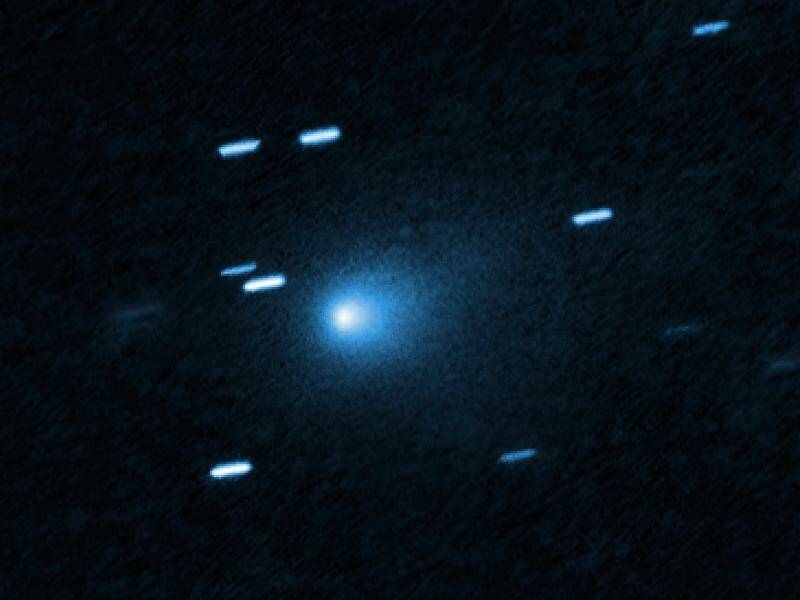
A comet originating from another star system is set to make its closest approach to Earth this week. The comet, known as 3I/Atlas, will pass within 269 million kilometres of our planet on July 7, 2023. This event marks a significant moment in its journey through the solar system before it heads back into interstellar space.
Discovered on July 1, 2023, by NASA’s sky-surveying Atlas telescope in Chile, 3I/Atlas is estimated to be between 440 metres and 5.6 kilometres in size. As it approaches its closest point to Earth, NASA is directing its space telescopes to observe the comet, which is now beginning to fade as it exits the solar system. Astronomers and sky enthusiasts are encouraged to take advantage of this opportunity to view the comet through telescopes, making it a potentially memorable spectacle for backyard astronomers.
Future Trajectory and Historical Context
After its close pass to Earth, 3I/Atlas is expected to come much closer to Jupiter in March 2024, at a distance of just 53 million kilometres. Following this, it will take until the mid-2030s for the comet to reach interstellar space, where it will continue its journey away from our solar system, never to return.
According to Paul Chodas, director of NASA’s Center for Near Earth Object Studies, 3I/Atlas is the third confirmed interstellar object to traverse our solar system. Unlike comets such as Halley’s Comet, which originate from the icy regions of our own solar system, interstellar comets like 3I/Atlas originate from distant star systems within the Milky Way.
The first confirmed interstellar visitor to be documented was discovered in 2017 by a telescope in Hawaii. This was followed in 2019 by another interstellar comet spotted by an amateur astronomer in Crimea. The discovery of 3I/Atlas further highlights the intriguing nature of celestial bodies that travel across vast interstellar distances.
As the comet makes its closest approach, it serves as a reminder of the dynamic and ever-changing nature of our solar system. With NASA’s ongoing observations and the engagement of amateur astronomers, the public has a unique opportunity to connect with the cosmos during this rare occurrence.