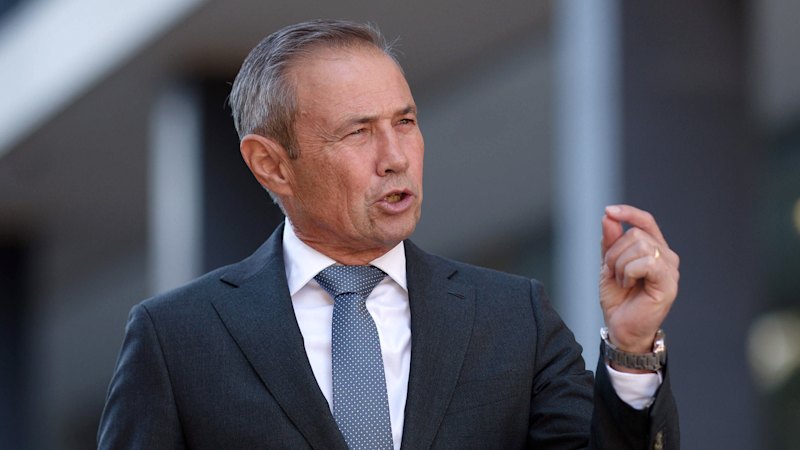
Roger Cook, Premier of Western Australia, has publicly defended the emphasis on gun reform following the tragic events at Bondi Beach, where a terrorist attack claimed the lives of 15 individuals during a Hanukkah celebration. The attack was carried out by Sajid Akram, 50, and his son Naveed Akram, 24, who utilized legally acquired firearms in the assault. Cook’s comments come as he prepares to collaborate with Chris Minns, the Premier of New South Wales, in a national response to the incident.
Following a national cabinet meeting on Monday, Prime Minister Anthony Albanese announced significant reforms aimed at harmonizing state and federal gun laws. Proposed changes include caps on gun ownership, expediting the establishment of a national firearms register, and enhancing information sharing between federal and state agencies.
Despite the urgency of the reforms, some critics, including former Prime Minister John Howard and Liberal backbencher Andrew Hastie, have accused the NSW and federal governments of utilizing gun reform as a distraction from ongoing issues regarding antisemitism and immigration policy.
In a response to these criticisms, Cook acknowledged the challenges of combating individual extremism but emphasized the necessity of gun reform for community safety. He stated, “We cannot always guarantee that we have awareness or that we have in control people with ill intent or violent intentions, but we can make sure that as a community, we can do what we can to ensure that we keep guns and weapons of that nature away from those sorts of people.” He noted that in the wake of such a horrific incident, focusing on gun legislation is a logical response.
Marcus Levitt, president of the Jewish Community Council of WA, expressed concerns over the rise of antisemitism in Australia, particularly following demonstrations after the October 7 attacks. He pointed out that rallies held in major cities, including marches on the Sydney Harbour Bridge and at the Opera House, have openly displayed antisemitic sentiments. Levitt stated, “None of this should be tolerated. Instead, it was celebrated. In fact, it was celebrated as a peaceful march.”
When questioned about the potential impact of these rallies on societal tensions and violent incidents like the Bondi shooting, Cook refrained from drawing direct connections. He highlighted the importance of balancing democratic rights with the need to prevent hate speech from proliferating in the community. “Obviously, when you have a rally, when you have a situation where people are responding to conflict overseas, it’s easy for that to spill over into our community,” he remarked.
Addressing the effectiveness of Western Australia’s gun laws on a national scale, Cook clarified that not every aspect of the state’s legislation would be applicable elsewhere. “I would never say that what we do in WA is fit for everyone, and I would never say that our workaround gun law reform is complete,” he stated. Cook expressed a desire for the federal government to take action on the types of firearms permitted in the country, underscoring the necessity for improved intelligence sharing and consistency in gun legislation across jurisdictions.
While a specific timeline for the proposed reforms has not been established, Home Affairs Minister Tony Burke indicated that efforts to advance the national firearms register would be expedited by two years, aiming for implementation in the second half of 2026.
As the national conversation surrounding gun reform intensifies, the focus remains on balancing safety concerns with civil liberties.