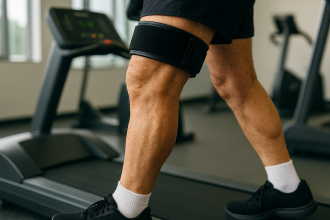
Blood flow restriction (BFR) training, which involves using inflated cuffs to limit blood flow while exercising, may increase the risk of falls among older adults, according to a recent study conducted by researchers at Murdoch University and several other institutions. The study highlights the need for caution when implementing this training method, particularly in elderly populations.
BFR training has gained traction globally as an effective way to enhance strength using lighter weights. By restricting blood flow to the limbs, BFR creates a low-oxygen environment that forces muscles to work harder. Associate Professor Brendan Scott, from the Centre for Healthy Ageing at Murdoch University, noted that while BFR can aid in muscle strength and size, its application must be approached with care.
“Our research shows that wearing these cuffs while walking changes how older adults walk, so exercise needs to be done in a safe environment,” Scott stated.
In the study, ten healthy adults with an average age of 73 participated in a treadmill walking test. They walked for ten minutes at varying speeds, first without cuffs, then with cuffs inflated to 40 and 60 percent of the pressure required to completely stop blood flow. A small motion sensor was attached to their lower backs to measure balance during the exercise.
The findings revealed a concerning trend. According to Associate Professor Brook Galna, another key author of the study, “We found that regardless of how fast people walked, wearing inflated BFR cuffs worsened their balance, and the more we inflated the cuffs, the worse their balance became.”
Despite these findings, Scott believes that BFR training could still offer long-term benefits for balance improvement in older adults. He emphasized, “Blood flow restriction training can deliver real benefits, and it’s possible that by challenging balance with BFR walking in a safe environment, older adults may adapt to actually enhance their balance.”
Importantly, the researchers noted that they have overseen hundreds of BFR walking sessions without any incidents of trips or falls attributed to the cuffs. Scott advises that individuals interested in BFR training should seek professional supervision and start at low pressures in a controlled environment.
The full study, titled “Bilateral blood flow restriction of the legs worsens acute walking balance of older adults – a full factorial randomised experiment,” was published in the journal Gait & Posture in October 2023. The research involved collaboration among Murdoch University, the University of Newcastle, the University of Notre Dame Australia, the University of Sydney, and Monash University.
The senior author, Brendan Scott, is supported by an NHMRC Investigator Grant (GNT1196462). No other authors disclosed conflicts of interest.
As BFR training continues to evolve, this research serves as a critical reminder of the potential risks involved, particularly for older adults, and underscores the importance of safety in exercise practices.