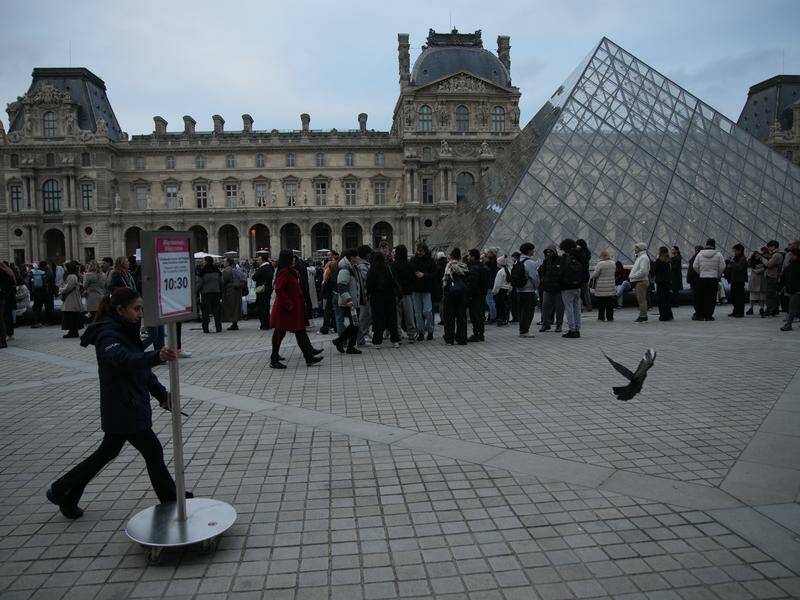
Employees at the Louvre Museum in Paris have voted to extend their strike, disrupting operations at the world’s most visited museum. The strike, which began earlier this week, stems from ongoing frustrations regarding chronic understaffing, deteriorating building conditions, and recent management decisions. These issues have been exacerbated by a brazen theft of crown jewels in October 2023, which highlighted significant security lapses at the museum.
The decision to prolong the strike was made during a general assembly on the morning of the protest, where workers unanimously agreed to maintain the walkout first initiated on Monday. The museum was already closed on Tuesday for its regular weekly shutdown. As of now, it remains uncertain whether the strike will lead to a complete closure on Wednesday, as management continues to assess staffing levels to determine if enough employees are available to safely open the galleries.
Visitors holding tickets formed long queues outside the museum on Wednesday morning, waiting for updates from management. The escalation of the strike reflects the growing tensions following the recent robbery, which has intensified calls for improved security and staffing solutions.
In response to the unrest, officials from the French Ministry of Culture convened crisis talks with union representatives on Monday. Proposed measures included the cancellation of a planned funding cut set for 2026, new recruitment for gallery guards and visitor services, and an increase in staff compensation. However, union officials expressed dissatisfaction with these proposals, stating they do not adequately address the core issues at hand.
Louvre President Laurence des Cars is scheduled to appear before the Senate’s Culture Committee later today. She faces scrutiny over her handling of security at the museum, especially after acknowledging an “institutional failure” in light of the robbery. Des Cars revealed that she only became aware of a critical security audit conducted in 2019 after the heist occurred, raising questions about oversight and accountability.
In the wake of the robbery, both France’s Court of Auditors and a separate administrative inquiry have criticized delays in implementing a long-promised security overhaul. Last month, the culture ministry announced emergency measures aimed at enhancing security, including the assignment of Philippe Jost, who oversaw the restoration of Notre Dame, to assist in reorganizing the museum’s security protocols. This appointment is widely interpreted as an indication of increasing pressure on Louvre leadership to address these pressing concerns.
As the situation develops, the impact of the strike on the museum’s operations and its thousands of daily visitors remains to be seen. The Louvre, a cultural icon and a cornerstone of global art heritage, faces a critical juncture as it navigates the challenges posed by staffing and security issues.