The recent terrorist attack in Bondi, Australia, has intensified scrutiny on Prime Minister Anthony Albanese and his government’s handling of rising antisemitism in the wake of escalating violence in the Middle East. On October 7, 2023, Hamas launched a brutal assault on Israel, resulting in profound shock and grief within the Israeli community and among Jewish populations globally. The aftermath led to a significant increase in public demonstrations supporting Palestine, some of which included chants that questioned Israel’s right to exist.
As violence continued to escalate, particularly in Gaza where the Israeli government has been conducting military operations, the death toll has reached an estimated 70,000, bringing further anguish to the global community. A ceasefire has been in effect since October, yet the societal impact of these events remains deeply felt in Australia, culminating in the tragic Bondi attack where fifteen individuals lost their lives and forty-one others sustained injuries.
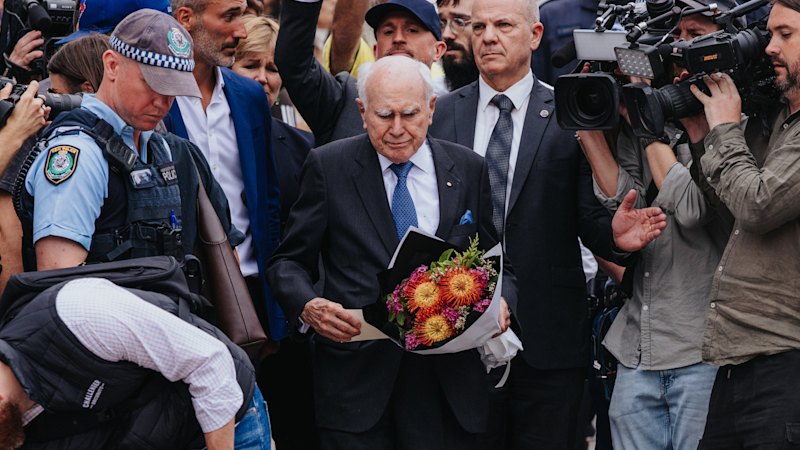
Critics of Albanese assert that the spike in antisemitism, which has manifested in various forms from verbal abuse to the arson of synagogues, created an environment conducive to the Bondi attack. Former Prime Minister John Howard has claimed that the situation is partly a consequence of Albanese’s actions, including his recognition of the state of Palestine at a time of heightened tension. This has sparked a contentious debate regarding the Prime Minister’s responsibility in addressing the rising tide of antisemitism, with some commentators suggesting that he failed to take adequate measures to curb such sentiments.
The Akram family, specifically Sajid Akram and his son Naveed Akram, have drawn particular attention due to their connections to extremist activities. Security services had flagged Naveed for investigation as early as 2019 but ultimately deemed him non-threatening. Sajid’s gun license history has also raised questions; his application lapsed in 2015 but was renewed in 2023, shortly before the Bondi attack.
In the aftermath of the Bondi incident, the government faces mounting pressure to address public safety and antisemitism. Critics, including Sussan Ley, the current opposition leader, have called for a reassessment of gun laws, asserting that focusing solely on antisemitism ignores the broader context of violence. Ley’s statements have fluctuated, reflecting the political tensions surrounding the issue. Initially offering support for the government’s response, she later criticized the administration for its handling of gun laws, suggesting that the time for reform is now.
As the discussion unfolds, the Australian Security Intelligence Organisation (ASIO) has clarified that the arson attack on Melbourne’s Adass synagogue in 2024 was not a product of local antisemitism but rather orchestrated by Iran’s Revolutionary Guard using criminal elements. This revelation complicates the narrative surrounding the Bondi attack, as it suggests a broader, more complex interplay of international terrorism rather than a purely domestic issue.
The political landscape is becoming increasingly fractured as both major parties grapple with how to respond to these events. Howard’s critiques of Albanese, while politically motivated, risk further polarizing the nation during a time when unity is essential. His comments have emboldened the Coalition to intensify their political attacks, potentially alienating voters who seek cooperation over division.
This situation underscores the challenges faced by Albanese’s government in navigating these sensitive issues. The Prime Minister has often approached leadership with caution, a style that may be tested further in this crisis. The ongoing discourse around gun legislation and antisemitism reflects a society struggling to reconcile its values and responsibilities in an increasingly interconnected world.
As Australia continues to reckon with the implications of the Bondi attack, it remains crucial for the government and opposition to work collaboratively to foster a more inclusive environment, one that prioritizes safety and addresses the root causes of hatred. The nation’s response in the coming weeks will undoubtedly shape the political landscape and influence public sentiment in the long term.