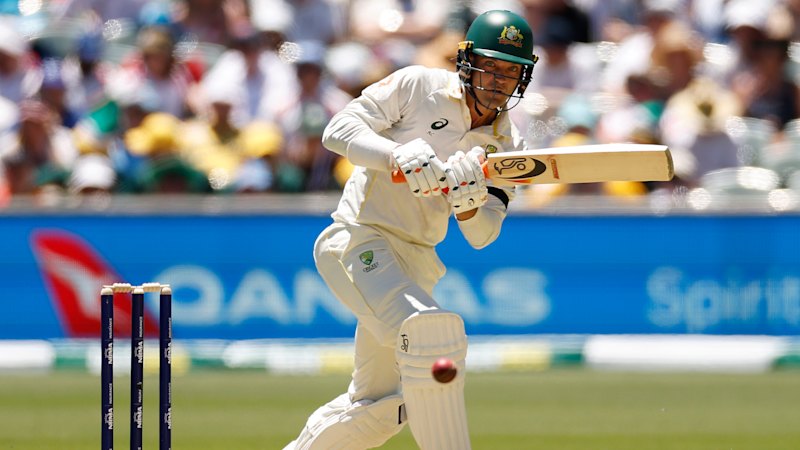
Calls are intensifying for the International Cricket Council (ICC) to fully fund and standardize the Decision Review System (DRS) across international cricket. The issue gained traction following a contentious incident involving Australian wicketkeeper-batsman Alex Carey during the third Test against England in Adelaide. Critics are questioning the inconsistency of DRS technology, particularly between different systems used worldwide.
The debate centers around the varying DRS technologies employed in different cricketing nations. Currently, some countries utilize Snicko, while others prefer Ultra Edge for adjudicating similar situations in matches. The discrepancies have raised concerns about fairness and accuracy in decision-making, particularly when high-stakes matches are on the line.
In a hypothetical scenario, if Carey were to walk through the streets of different countries, he would encounter footpaths varying in quality, much like the DRS technologies at play in international cricket. These differences can lead to significant game-changing decisions, much like stumbling on an uneven pavement. During the match in Adelaide, Carey believed he had edged a ball when on 72 runs, only to benefit from a technological error involving the DRS.
Ricky Ponting, a former Australian captain, expressed his discontent with the current state of technology, emphasizing that the “Snicko” technology used in Australia is inferior to the Ultra Edge product employed in England. Such inconsistencies prompt questions about why two different systems are allowed to operate in the same sport.
Financial constraints play a crucial role in this disparity. The cost of implementing DRS technology is often borne by the host boards or shared with broadcasters during bilateral series, such as the Ashes. For wealthier cricketing nations like Cricket Australia and the England and Wales Cricket Board (ECB), these costs are manageable. Meanwhile, poorer nations, such as Zimbabwe and the West Indies, struggle to afford DRS for all matches, often limiting its use to major home series.
As the ICC prepares to review DRS processes at the end of the season, it is vital to consider a unified approach to technology. The ICC currently funds DRS for its flagship tournaments, including the World Cup and the World Test Championship Finals. However, beyond these events, the lack of a uniform standard creates a breeding ground for controversy and inconsistency.
During the 2018 Ashes, Jonny Bairstow lamented that DRS inconsistencies were “messing with careers and livelihoods.” His comments highlighted the frustrations players face when dealing with different systems that lead to ambiguous decisions. Bairstow noted that discrepancies in technology can lead to confusion, especially when players are working hard to achieve their goals on the field.
The ICC’s revenue continues to grow, reaching hundreds of millions annually, providing ample resources to invest in DRS technologies that could enhance the sport’s integrity. As cricket enters an era where technology plays a pivotal role, the ICC has the potential to unify the DRS experience for all players and fans.
The call for action is clear: the ICC should take the necessary steps to ensure that all teams benefit from accurate and consistent technology, fostering fairness and trust within the sport.