




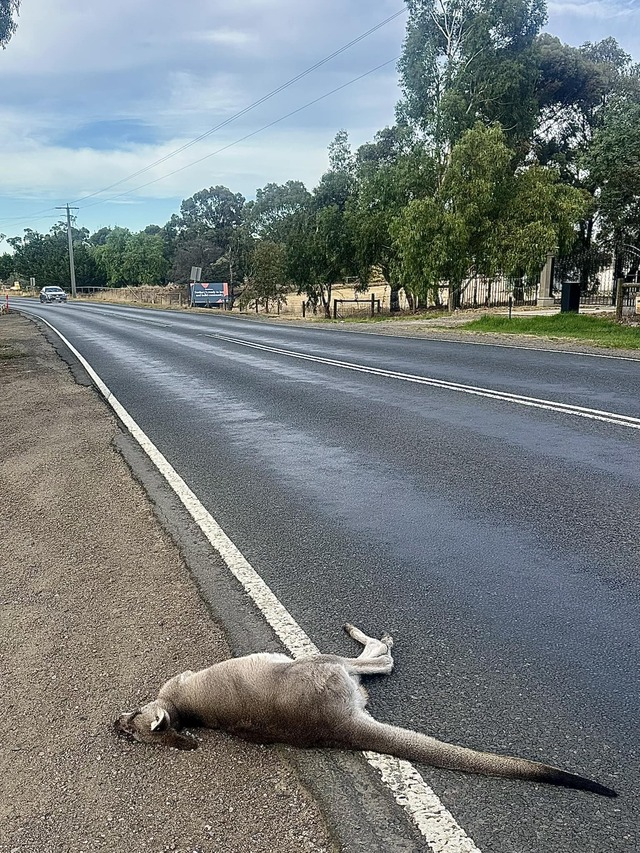
UPDATE: A Victorian Parliamentary inquiry has just been initiated to address the alarming increase in wildlife roadstrikes, particularly in Melbourne’s outer north. The inquiry, chaired by Animal Justice MP Georgie Purcell, comes amid dire reports of wildlife fatalities on Sunbury Road, Oaklands Road, and Somerton Road, where local wildlife rescuers describe the situation as “absolute carnage.”
In a shocking revelation, AAMI data shows a staggering 137% rise in reported kangaroo collisions in the Hume municipality over the past five years. Sunbury has recorded the highest number of wildlife collisions in Victoria, with 203 reported collisions involving kangaroos in 2024, up from just 75 in 2019.
Local volunteer rescuer Krysti Severi has been on the front lines, frequently responding to distress calls in this area. She states, “Sunbury Road has turned into a graveyard,” highlighting the traumatic experience for commuters. Many drivers are left traumatized, with some reporting PTSD from the relentless scenes of carnage they witness on their daily routes.
The inquiry aims to tackle this escalating crisis through legislative reform and enhanced driver education. It will also investigate the operational challenges faced by both paid and volunteer wildlife rescuers, who are increasingly stretched thin. “The overworked wildlife sector is burnt out,” Purcell noted, emphasizing the urgent need for solutions that can help both animals and motorists.
As part of the inquiry, Hume Council has submitted nine critical recommendations to the state government. These measures include the establishment of a centralized wildlife population and roadstrike database and the introduction of wildlife roadstrike triggers for speed limit reviews. Notably, current speed limits of 80 km/h on these roads are being scrutinized, as they contribute to the high incidence of collisions.
The Hume Council’s submission also highlights the challenges posed by rapid urban development in suburbs like Sunbury, which disrupts wildlife habitats and increases vehicle traffic. “Reducing vehicle speed is one of the most effective and immediate measures to lower the likelihood and severity of wildlife collisions,” the council states.
Volunteers like Severi are calling for immediate action, expressing frustration over the ongoing crisis. “There has to be something done in that area because it is an absolute massacre out there,” she said, urging community support for local wildlife efforts.
The inquiry has also garnered attention from wildlife advocates. Alyssa Wormald, president of the Victorian Kangaroo Alliance, expressed hope that the inquiry will produce urgent solutions. “We desperately need innovative strategies to keep wildlife and motorists safe on our roads,” she stated.
Officials encourage the public, including councils and organizations, to contribute to the inquiry by submitting their experiences and recommendations. The government hopes to implement effective strategies to protect both wildlife and motorists in the wake of this escalating crisis.
For those who encounter sick, injured, or orphaned native animals, Wildlife Victoria offers a 24/7 emergency response service at 8400 7300. With the inquiry underway, the focus now shifts to potential legislative changes that could save countless lives on these perilous roads.
