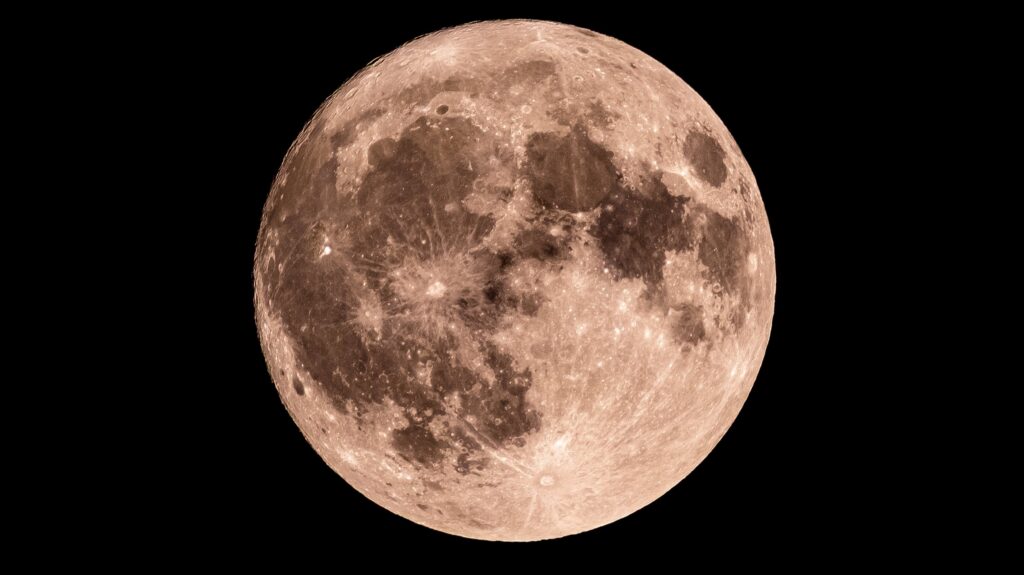
Tonight, December 20, the Moon enters the waxing crescent phase, characterized by a slim sliver of illumination. For observers in the United States, this phase marks an opportunity to witness the Moon’s gradual growth in visibility. However, NASA’s Daily Moon Observation indicates that only 0% of the Moon will be lit up tonight, making it nearly impossible to discern any surface features.
As the Moon orbits Earth, it undergoes a complete cycle roughly every 29.5 days, known as the lunar cycle. During this period, the amount of sunlight reflecting off the Moon’s surface changes, resulting in different phases. While the same side always faces Earth, the visible illumination varies significantly.
Understanding Moon Phases
The lunar cycle consists of eight primary phases. The sequence begins with the New Moon, when the Moon is positioned between Earth and the Sun, rendering it invisible to the naked eye. Following this is the waxing crescent phase, where a small portion of the Moon’s right side begins to light up.
The progression continues through the first quarter, when half of the Moon is illuminated, and the waxing gibbous phase, where more than half is lit but it is not yet full. The Full Moon, which occurs next on January 3, features the entire face of the Moon fully illuminated.
Subsequently, the Moon enters the waning gibbous phase, where it begins to lose light on the right side. This is followed by the third quarter or last quarter phase, where the left side is now illuminated, and finally, the waning crescent phase, where only a thin sliver remains visible before it becomes dark again.
Looking Ahead
Following tonight’s waxing crescent, the next significant lunar event is the Full Moon on January 3. Prior to this, the last full moon was on December 4. Observers eager to capture the beauty of the Moon should mark their calendars for these dates, as the changing phases provide a remarkable view of our celestial neighbor.
In summary, while tonight’s visibility is limited, the lunar cycle continues to be a source of fascination and wonder as it transitions through its various phases. Whether you are an avid astronomer or a casual observer, keeping track of the Moon’s journey can enhance your appreciation of the night sky.