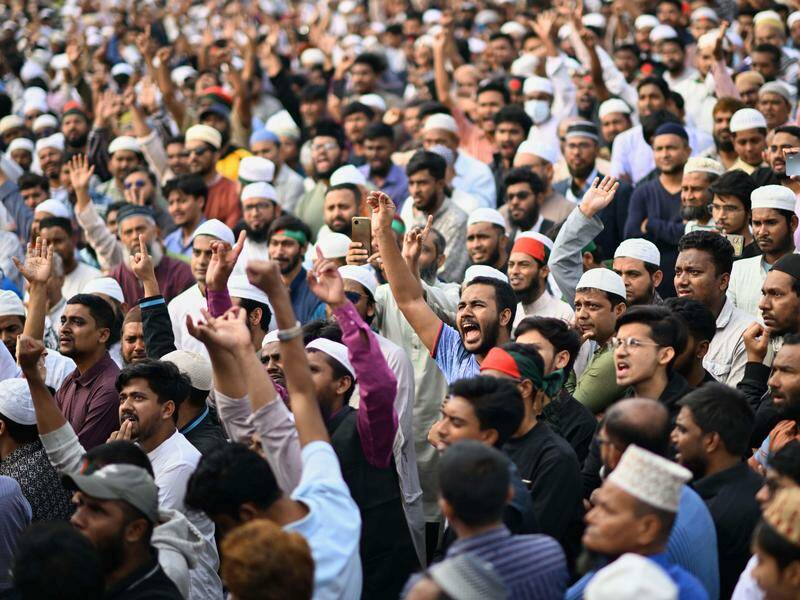
Hundreds of thousands gathered in Dhaka for the funeral of prominent activist Sharif Osman Hadi, who succumbed to gunshot wounds sustained during an attack on December 12, 2024. Hadi died in a hospital in Singapore on December 14, as political tensions escalated ahead of the upcoming national elections. His death has sparked violence and heightened diplomatic tensions between Bangladesh and India.
Hadi was a significant figure in the political uprising that led to the end of former prime minister Sheikh Hasina‘s 15-year rule. Following his assassination, police have identified suspects and believe the shooter fled to India, where Hasina has been in exile since August 2024. This incident has resulted in a diplomatic spat, with India summoning Bangladesh’s envoy and Bangladesh reciprocating by calling in the Indian envoy.
Funeral and National Mourning
Security was notably heightened in Dhaka on Saturday as hundreds of thousands attended Hadi’s funeral prayers outside the parliament complex. His body returned to Bangladesh on Friday night, and the government declared December 16 a national day of mourning. Hadi, a spokesperson for the Inqilab Moncho cultural group, was laid to rest on the campus of Dhaka University, next to the grave of national poet Kazi Nazrul Islam.
Mourners carried flags and chanted slogans reflecting their commitment to Hadi’s legacy, asserting, “We will not let Hadi’s blood go in vain.” Following the announcement of his death, protests erupted, resulting in violence as demonstrators attacked the offices of two major national newspapers.
Political Context and Future Implications
The interim government, led by Nobel Peace Prize laureate Muhammad Yunus, has urged the public to remain calm amid the unrest. Hadi was known for his outspoken criticism of both Hasina and India. He had intended to run as an independent candidate in the upcoming elections, scheduled for February 2025.
Bangladesh is undergoing a critical political transition under Yunus’s leadership, aiming to restore democracy through these elections. The Awami League party, led by Hasina, remains a powerful force, while the Bangladesh Nationalist Party, led by former prime minister Khaleda Zia, is positioned as a significant rival. The Jamaat-e-Islami party, which has a controversial history tied to the country’s independence war in 1971, is also attempting to expand its political influence.
Hasina, who has been sentenced to death on charges of crimes against humanity, has not been extradited by India, despite multiple requests from the Yunus-led government. As the nation mourns Hadi, the unfolding political landscape could significantly impact the upcoming elections and the future of democracy in Bangladesh.