




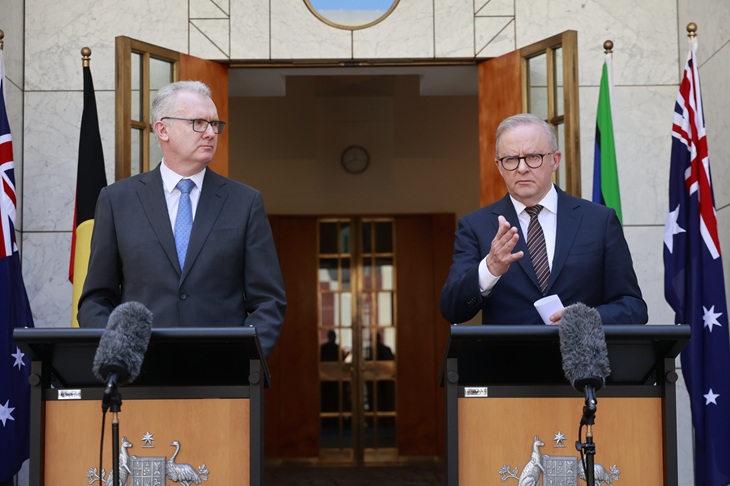
CANBERRA, AUSTRALIA - DECEMBER 19: Minister for Home Affairs Tony Burke (L) and Australian Prime Minister Anthony Albanese (R) speak to the media at Parliament House on December 19, 2025 in Canberra, Australia. Albanese held the press conference as the government comes under pressure over the recent Bondi mass shooting, promising to tighten gun laws across the country. (Photo by Hilary Wardhaugh/Getty Images)
UPDATE: Following the horrific Bondi terror attack during a Hanukkah event, Australian Prime Minister Anthony Albanese is facing mounting criticism for his response. The attack, which left at least 15 people dead and many more injured, has ignited urgent discussions about antisemitism and gun control in Australia.
The assault, deemed an act of antisemitic terrorism, has prompted widespread outrage. Ahmed al-Ahmed, a hero of the incident, intervened to stop the violence, highlighting that the Muslim community does not support such extremist actions. This act of bravery came amid a climate where antisemitism has seen an alarming rise, with some commentators suggesting that the government has failed to address the root causes.
Albanese’s initial reaction—calling for stricter gun control—has been perceived as a diversion from the pressing issue of Islamic extremism. Critics, including former Treasurer Josh Frydenberg, have accused him of sidestepping the real problem. “By blaming guns, Albanese is avoiding the conversation we need to have about the rising tide of antisemitism,” Frydenberg stated.
The Prime Minister’s handling of the situation is facing scrutiny, especially as protests have increasingly featured calls for an intifada, a term associated with violent uprisings against Israel. Observers note that this rhetoric has contributed to a dangerous environment where attacks against Jewish Australians are becoming more common.
As the government grapples with its response, it has announced plans to clamp down on hate speech. However, this move has been criticized as hasty and ineffective. Experts warn that censorship may lead to backlash rather than solve the underlying issues. Instead of addressing the rhetoric head-on, the government is opting for a knee-jerk reaction, which could exacerbate resentment within communities.
Meanwhile, proposed changes to Australia’s already strict gun laws have also sparked debate. Authorities are contemplating additional licensing checks, rather than focusing on refining existing regulations. Critics argue that these measures are excessive and do not address the core issues surrounding the attack.
The events of October 7, 2023, have uncovered a deeper crisis within Australian society regarding the normalization of antisemitism and the rise of violent extremism. The government’s failure to proactively tackle these issues has left many Australians feeling unsafe and concerned about their future.
As Australia navigates the fallout from this tragedy, the nation is left grappling with critical questions: How can the government effectively combat hate and protect its citizens? And what steps will be taken to ensure that such violence does not occur again?
The urgency of these discussions cannot be overstated, and the pressure is mounting on Albanese to take decisive action. The public is watching closely, and demands for accountability are louder than ever.
