Apple has made significant strides in enhancing artificial intelligence (AI) research capabilities through improved clustering technology over Thunderbolt 5. This advancement allows researchers to process massive models more efficiently by pooling memory resources, solidifying Apple’s position in the competitive tech landscape.
In November, Apple announced upcoming features in the new macOS Tahoe 26.2. Among the notable improvements was enhanced support for GPU-based neural accelerators within its machine learning framework, MLX. Equally important was the introduction of Thunderbolt 5 clustering support, a change that promised to expand the possibilities for AI researchers.
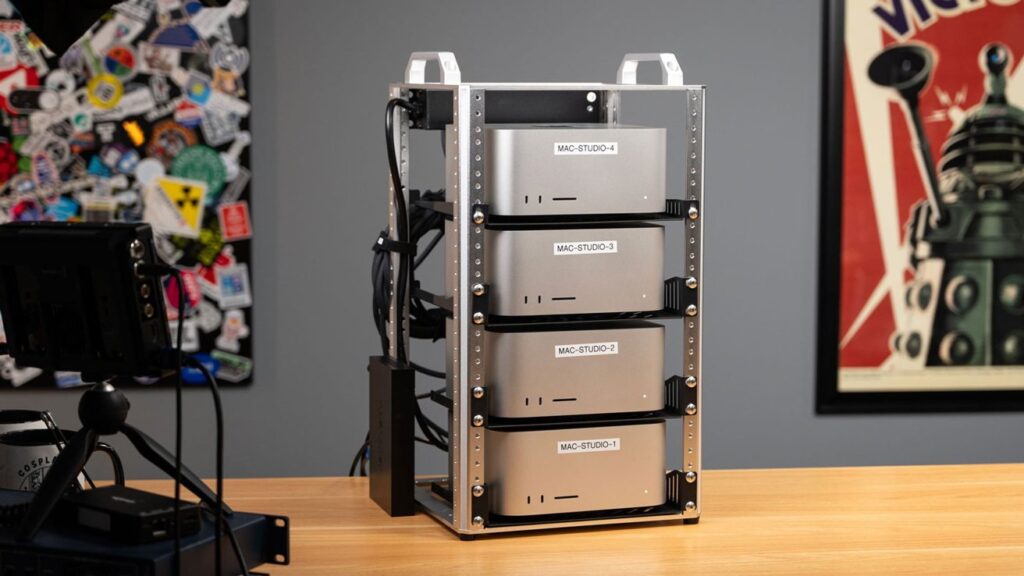
Recent real-world tests have confirmed the benefits of Thunderbolt 5 for clustering applications. A group of four M3 Ultra Mac Studio systems, configured for clustering over Thunderbolt 5, demonstrated impressive performance enhancements in AI workloads. This setup, highlighted by technology expert Jeff Geerling, showcases how the latest hardware can significantly impact the efficiency of machine learning processing.
The integration of Thunderbolt 5 technology represents a pivotal moment for AI research. By enabling faster data transfer and improved memory pooling, researchers are now able to leverage the full capabilities of their Mac clusters. This shift could lead to more sophisticated AI models and faster iteration cycles, ultimately accelerating advancements in the field.
As the demand for powerful computational resources continues to grow, innovations like those introduced by Apple are crucial. The enhancements in macOS Tahoe 26.2 not only cater to the needs of AI researchers but also reflect a broader trend in the tech industry towards more interconnected, high-performance computing environments.
Looking ahead, the potential applications of this technology extend beyond AI research. Industries ranging from healthcare to finance could benefit from the increased processing power and efficiency that Thunderbolt 5 clustering offers. As Apple continues to refine its machine learning tools, the impact on various sectors will likely become more pronounced.
In conclusion, the introduction of Thunderbolt 5 support marks a transformative step for AI researchers utilizing Apple’s hardware. By enhancing the capacity for clustering, Apple is positioning itself as a key player in the evolving landscape of machine learning and artificial intelligence.