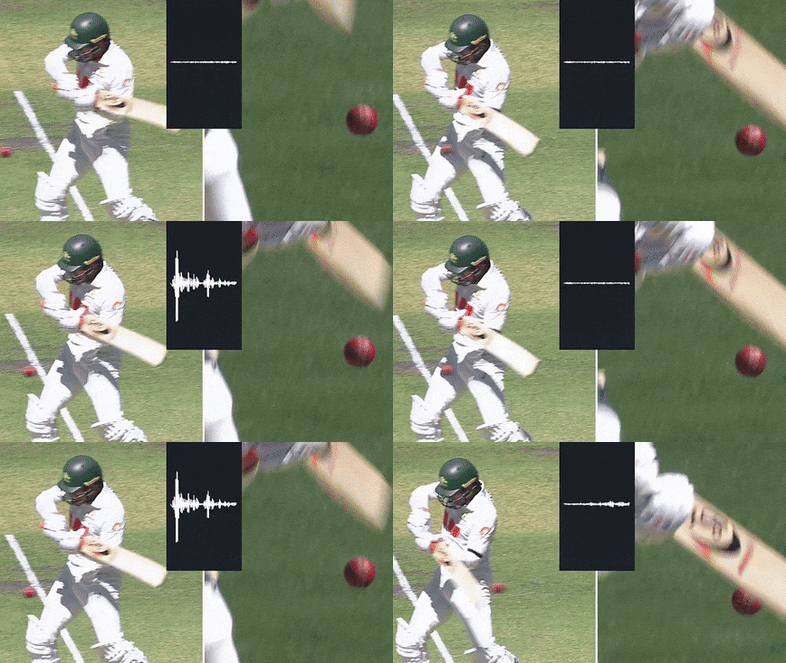
The ongoing Ashes series has placed the spotlight on the Decision Review System (DRS), particularly after a controversial incident involving Australian batsman Alex Carey. During the first day of the third Test in Adelaide, Carey admitted to edging a ball behind for an out, a decision that raised questions about the accuracy of DRS due to an operator error with the stump microphone. The incident highlights both the advancements and limitations of technology in cricket.
The evolution of cricket technology has been remarkable. Since the first radio broadcasts in 1928, the game has embraced various technologies, from the early synthetic broadcasts during the infamous Bodyline series in 1932-33 to today’s high-resolution cameras. These cameras capture every detail, often revealing nuances invisible to the human eye. In contrast, the human visual system processes images at around 30 frames per second, while modern cameras can reach thousands of frames per second.
The introduction of televised replays in the 1980s significantly influenced umpiring decisions. As errors became more visible, umpires learned from technology. What appeared to be a close call could be accurately determined with replays, leading to an increase in correct decisions. Despite these advancements, mistakes still occur, occasionally down to mere centimeters, as seen in the recent DRS debate.
Controversies Surrounding DRS
As the Ashes series progresses, the reliability of DRS has come under scrutiny. Following Carey’s admission of an edge, it was revealed that an operator error led to the incorrect assessment, prompting frustration among English players. Such incidents remind us that while technology enhances the game, it is not infallible. Inaccuracies can arise, similar to how traffic cameras may allow for a few kilometers of leniency due to their inherent limitations.
The Real-Time Snickometer (RTS) and UltraEdge technologies play crucial roles in detecting edges. RTS, while cheaper and easier to implement, has a lower frame rate, sometimes causing discrepancies between visual and sound data. Umpires must navigate these challenges, weighing the technology against their own observations and the players’ behaviors on the field.
Players in cricket exhibit differing attitudes towards their dismissals. Some, known as “walkers,” leave the crease without waiting for a decision, reflecting integrity and humility. Others, the “talkers,” may challenge the umpire’s calls, often leading to contentious moments on the field. The dynamics of player behavior and umpire authority remain central to the game, regardless of technological support.
The Human Element in Cricket
Despite the growing influence of technology, cricket retains its essence as a human-driven sport. The unpredictability brought by human emotions, errors, and decisions is a key part of what makes the game captivating. While innovations like DRS aim to enhance fairness, they cannot replace the unique qualities that human judgment brings.
The recent controversy surrounding Carey’s dismissal underscores a larger issue within the sport. England’s focus on blaming external factors, such as technology, may distract from the need to reassess their own approach to decision-making. As players grapple with the balance of technology and human judgment, the conversation about DRS and its implications will undoubtedly continue.
In conclusion, while technological advancements in cricket have made significant strides, they do not guarantee perfection. The interplay between human intuition and machine precision remains a defining characteristic of the game. As cricket evolves, the challenge will be to harness technology without losing the organic nature that makes the sport truly unique. Perfect machines, after all, will not necessarily make cricket a better game.