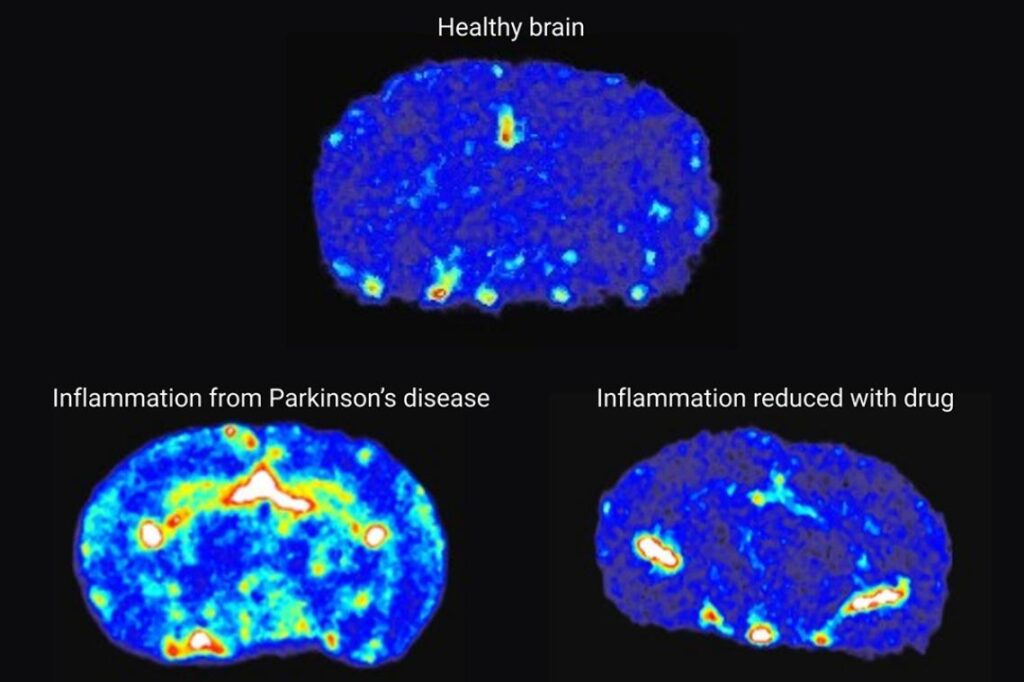
Researchers from the University of Queensland have made significant strides in the development of a new anti-inflammatory drug that could potentially transform treatments for Parkinson’s disease. The study, led by Dr. Eduardo Albornoz Balmaceda from UQ’s School of Biomedical Sciences, demonstrated that this innovative oral medication effectively blocks inflammation in the brain, which is a contributing factor to the disease’s progression.
Dr. Albornoz Balmaceda explained that inflammation functions like a “slow-burning fire” within the brain, progressively harming the neurons responsible for producing dopamine, a critical chemical for movement regulation. His team’s findings indicate that this drug targets a component of the immune system known as inflammasomes, successfully reducing inflammation and halting neuronal death associated with Parkinson’s disease.
Breakthrough Imaging Techniques Reveal Drug Effectiveness
Utilizing advanced imaging techniques, the researchers employed simultaneous positron emission tomography (PET) and magnetic resonance imaging (MRI) at UQ’s Centre for Advanced Imaging to monitor the drug’s effects in real-time. Dr. Albornoz Balmaceda expressed excitement over the ability to observe changes in the living brain. He stated, “This imaging approach gives us a safe and powerful tool to track target engagement and disease progression, which is essential for designing future human clinical trials.”
Senior author Professor Trent Woodruff, who leads UQ’s Neuroinflammation Lab, emphasized that these findings represent a crucial advancement in the search for disease-modifying therapies. He noted that Parkinson’s disease is one of the fastest-growing neurodegenerative conditions globally, with projections indicating it could affect more than 25 million people by 2050. Current therapies primarily alleviate symptoms without significantly altering disease progression, highlighting the urgent need for new treatment avenues.
The research revealed typical patterns of dopamine neuron loss associated with Parkinson’s, but brain scans indicated improved signals following treatment with the new drug. This evidence suggests that the drug not only slows the disease but could also protect the brain from further damage.
Partnerships and Future Implications
The drug was developed by Inflazome, a company founded by Professor Luke O’Neill and Professor Matt Cooper, both of whom are co-corresponding authors in the research. Inflazome, established in 2016 through UQ’s commercialization company UniQuest, was later acquired by Roche.
The study received support from several reputable organizations, including the NHMRC, The Michael J. Fox Foundation, and the Shake It Up Australia Foundation. The research findings have been published in the journal Brain, underscoring their significance in the ongoing battle against Parkinson’s disease.
As this research progresses towards potential clinical trials, the implications for millions affected by Parkinson’s could be profound. The combination of innovative drug development and advanced imaging techniques may pave the way for therapies that not only treat symptoms but also modify the course of this challenging disease.