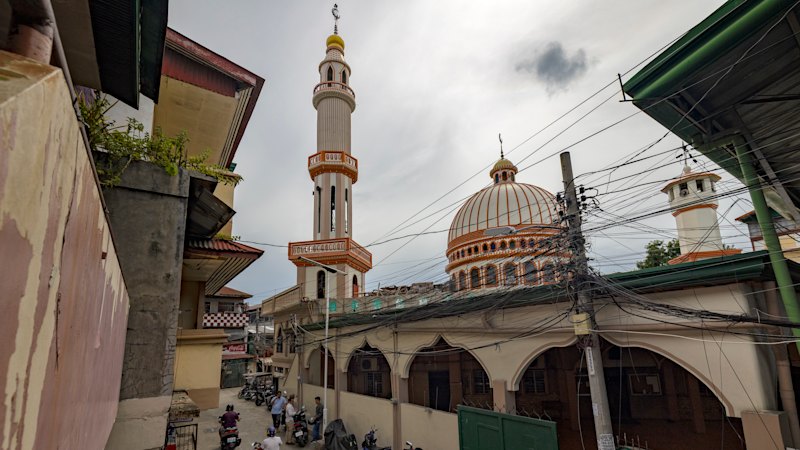
In a significant move to gather information about the Bondi gunmen, pictures of Sajid and Naveed Akram will be displayed at over 70 mosques in Davao City, Philippines. Local Muslim leaders are actively urging community members to come forward with any details regarding the pair’s activities during their month-long stay before the tragic shooting that claimed 15 lives in Australia.
Sheikh Muhammad Yusop Pasigan, the region’s most senior Islamic cleric, revealed plans to place A4 printouts of the gunmen’s images above the entrances of mosques. He described the Akram duo as “no good – not good people,” emphasizing the importance of community vigilance. “If there are newcomers at the mosques, we will get their details and identification. If they resist and cause trouble, we will call 911,” he added.
The Akrams reportedly spent their time in Davao from November 1 to November 28, 2023, largely confined to their hotel room at the GV Hotel. Their limited excursions have become the focus of a multi-faceted investigation by Philippine authorities. Despite extensive efforts, only a few CCTV images of their movements have surfaced thus far.
Investigation and Community Response
The Philippines National Police confirmed that Sajid Akram, aged 50, visited a local gun shop during his stay. Other footage captured the pair jogging and walking around the vicinity of their hotel. A police spokesperson noted that a report had surfaced regarding a potential link to two men from Sydney who were also in Davao during the Akrams’ visit, although further details were not available.
Davao City, situated on the island of Mindanao, has historically been a hub for Australian tourists, particularly those traveling for surfing excursions to nearby Siargao Island. While the region is predominantly Catholic, it is also known for the presence of Islamist militants. The Akrams had been found with homemade Islamic State flags in the vehicle they used during their December 14 attack at Bondi Beach.
Responding to media narratives that depict Mindanao as a hotbed of violent extremism, the Philippine government asserted that Islamic State-inspired groups have been significantly weakened. They emphasized that these factions are “fragmented, deprived of leadership, and operationally degraded.”
Sheikh Pasigan stated that he has no information about extremist elements within Davao City. He plans to meet with other senior Islamic leaders to share information and explore additional ways to encourage community members to assist in the investigation.
Regional police director Leon Victor Rosete confirmed ongoing efforts to conduct “backtracking operations” to identify individuals who may have interacted with the Akrams and assess possible support networks. This investigation remains crucial as authorities seek to piece together the timeline of events leading up to the shooting in Australia.
The community’s proactive stance highlights the collective effort to address the ramifications of the Bondi attack and ensure the safety and integrity of their neighborhoods. As investigators continue to work diligently, local leaders stress the importance of vigilance and cooperation in the face of such tragedies.