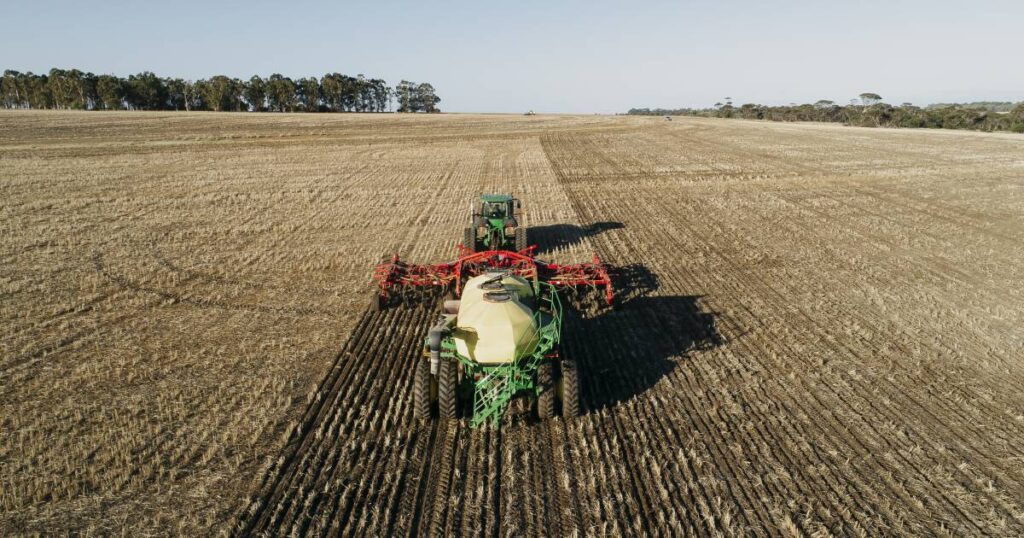
The rural property market in Western Australia, particularly in the Esperance and South East regions, has shown notable recovery in 2025, driven by an improved supply of quality properties. According to property specialist Rowan Spittle from AWN, this rebound follows the highs of 2023 and the downturn experienced in 2024, leading to a stabilization in land values.
Market Fluctuations and Property Trends
In 2023, the property market was characterized by intense demand and limited supply. Notably, sandplain properties reached prices as high as $16,061 per arable hectare, while transitional mallee properties commanded up to $19,846 per arable hectare, particularly during late spring and early summer. However, an exceptionally dry spring in 2023 resulted in below-average yields for many farmers, leading to a significant decrease in buyer activity.
“The seeds were sown in 2023, when there was a very hot property market with very little supply,” Mr. Spittle stated. As the harvest equipment was put away, farmer interest in purchasing properties diminished.
The scenario shifted in 2024, with a moderate increase in available properties, particularly in the sandplain category. Despite this, local buyer interest remained low. Strengthening interest rates and a renewed focus on profitability resulted in decreased inquiries for properties lacking strong cropping histories and quality soils. “Farmers had lost their fear of missing out and were prepared to wait for the right property to come along,” Mr. Spittle explained.
By the end of 2024, land prices were reportedly down by around 15 percent, as average or better crop yields contributed to some late settlements in early 2025.
Resurgence in Buyer Interest
The beginning of 2025 marked a turning point, with favorable sowing conditions leading to exceptional harvest results from Salmon Gums to the coast. The increase in the supply of quality properties prompted a significant rise in inquiries for both purchasing and leasing land. Mr. Spittle noted that the 2025 market appeared to strengthen by approximately 7-10 percent, recovering some of the losses from the previous year.
A standout transaction was the sale of The Oaks in July 2025, which was a joint effort between AWN and Colliers. This property sold for over $50 million, translating to more than $12,890 per arable hectare, effectively establishing a new baseline for rural land prices in the region.
Despite this positive trend, some sandier properties that had not been fully improved struggled to attract buyers or remained unsold. Mr. Spittle highlighted that the real purchasing strength in the region is now primarily driven by local farming families competing fiercely for high-quality farmland.
Looking ahead, Mr. Spittle anticipates that 2026 will maintain similar trends, with modest growth influenced by seasonal factors and farmers’ outlooks on medium-term profitability in their respective regions.