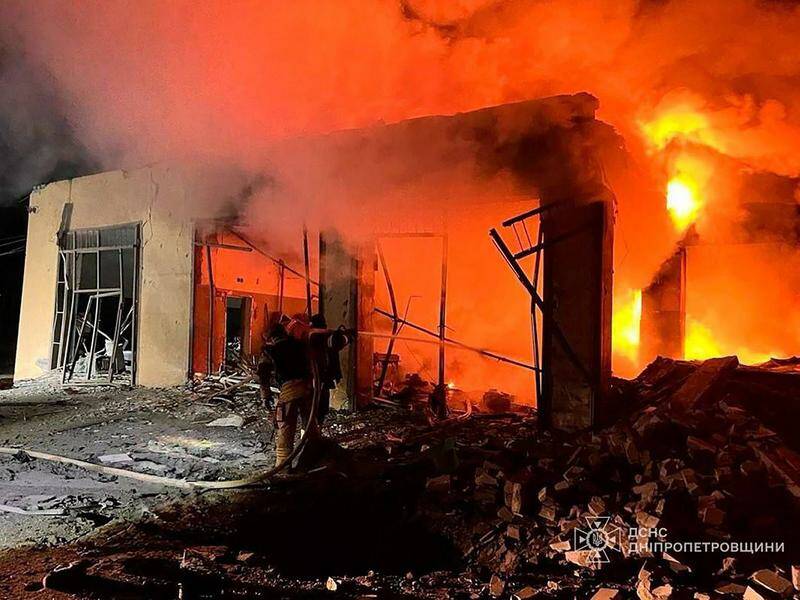
A recent wave of missile and drone attacks by Russia on Ukraine has resulted in the deaths of at least three individuals, including a child. This assault has also caused significant power outages across the country, coinciding with preparations for the Christmas holiday. The strikes primarily targeted energy facilities, particularly affecting western regions, according to Prime Minister Yulia Svyrydenko.
The violence unfolded on December 26, 2023, just days after US-led peace negotiations aimed at resolving the nearly four-year conflict. In the central Zhytomyr region, two people, including a four-year-old child, lost their lives. Additionally, one fatality was reported near the capital, Kyiv, where local officials indicated that at least five others sustained injuries.
President Volodymyr Zelenskiy condemned the attack, stating on social media platform X that it involved more than 30 missiles and approximately 650 drones targeting at least 13 regions. He remarked, “An attack ahead of Christmas, when people simply want to be with their families, at home, and safe.”
The impact of the strikes led to emergency power outages in several regions, including Kyiv and the surrounding areas. Ukraine’s energy ministry confirmed that critical infrastructure was damaged in regions such as Chernihiv, Lviv, and Odesa. The country’s grid operator reported widespread outages, causing disruptions in electricity supply as families prepared for the festive season.
Poland, a NATO member bordering western Ukraine, responded by deploying Polish and allied aircraft to secure its airspace after the missile strikes prompted concerns near its border. The operational command in Poland stated that these measures were “preventive in nature and aimed at securing and protecting the airspace.” Such actions become routine during significant Russian attacks, particularly when the strikes pose an increased risk to Polish territory.
While President Zelenskiy expressed optimism about the peace negotiations held in Miami on December 20-21, Kremlin spokesman Dmitry Peskov downplayed any notion of progress. He described the discussions as a “working process” and denied that there had been any breakthroughs. Both Ukrainian and Russian officials indicated their teams were returning home to report on the outcomes of the talks.
Zelenskiy characterized the negotiations as being “close to a real result,” emphasizing the collaborative efforts between Ukraine and the United States. The discussions centered around a 20-point plan proposed by US envoys, which had faced criticism for being overly favorable to Russia in its initial drafts.
The key issues under consideration include security guarantees for Ukraine to deter future Russian aggression and strategies for the country’s economic recovery post-conflict. Zelenskiy stressed the importance of determining whether the US could elicit a genuine response from Russia regarding its willingness to shift focus from aggression to diplomacy.
As the situation develops, Zelenskiy reiterated the necessity of maintaining pressure on the Kremlin to diminish its capacity for warfare. He highlighted measures such as reducing the price of Russian oil and implementing stringent global sanctions as vital to influencing Russian behavior.
The recent events underscore the ongoing volatility in Ukraine as it grapples with the consequences of sustained military aggression, particularly during a time traditionally associated with peace and family gatherings.