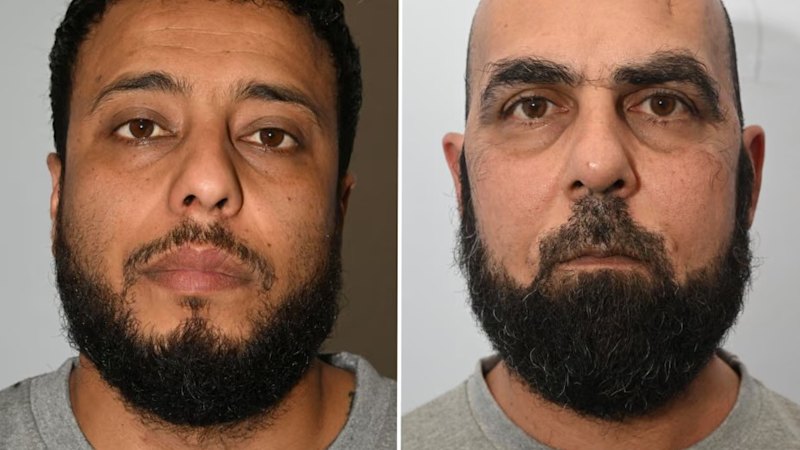
Two men were found guilty on October 31, 2024, of plotting a mass shooting targeting the Jewish community in the UK. The attack, inspired by the militant group Islamic State, was intended to inflict significant casualties, highlighting the ongoing threat posed by extremist ideologies. According to police and prosecutors, Walid Saadaoui, 38, and Amar Hussein, 52, had planned to use automatic firearms in what could have been “one of, if not the, deadliest terrorist attacks in UK history,” as stated by Assistant Chief Constable Robert Potts.
Their convictions follow a recent mass shooting in Manchester that claimed 15 lives, raising concerns about an uptick in violent Islamist extremism. Although Islamic State did not directly claim responsibility for that incident, its response suggested admiration for the attack, intensifying fears of further violence. Current European security assessments indicate that while the threat level is not as severe as during the height of the group’s power, there are signs of increasing radicalization and potential attacks originating from Europe.
Details of the Foiled Attack
During their trial at Preston Crown Court, prosecutors detailed how Saadaoui and Hussein had embraced Islamic State’s extremist views and were prepared to become “martyrs.” Saadaoui orchestrated the smuggling of two assault rifles, a pistol, and nearly 200 rounds of ammunition into the UK via the port of Dover. He was arrested in May 2024, just as he was making arrangements to acquire additional weapons and ammunition.
Unbeknownst to Saadaoui, a man he was communicating with about procuring the firearms was an undercover operative. Prosecutor Harpreet Sandhu emphasized that Saadaoui’s intentions were grave, citing a message he sent that referenced the 2015 Paris attacks, which killed 130 people. Saadaoui expressed admiration for the attack’s orchestrator, suggesting that he viewed such incidents as benchmarks for his own plans.
“Based on Walid’s communications and interactions, it was clear that he regarded a less sophisticated attack as inadequate,” Potts remarked. The intention was to maximize casualties, particularly targeting Jewish individuals, which Saadaoui articulated as his primary objective.
Legal Outcomes and Broader Implications
Both men maintained their innocence throughout the trial, with Saadaoui claiming he participated in discussions out of fear for his life. Hussein, who was less involved in the proceedings, made headlines during the trial for shouting a provocative statement regarding the ongoing conflict in Gaza, raising questions about his mindset and motivations.
In addition to Saadaoui and Hussein, Bilel Saadaoui, 36, Walid’s brother, was convicted for failing to disclose information about the planned attack, although prosecutors indicated he was hesitant to join the conspiracy. This case is part of a troubling trend in Britain and beyond, where Islamic State-inspired plots continue to emerge, despite the group’s diminished operational capabilities compared to the past decade.
The resurgence of extremist ideologies has prompted increased vigilance from law enforcement agencies. Ken McCallum, head of the UK’s domestic counter-intelligence agency MI5, revealed that since January 2020, 19 late-stage attack plots have been thwarted, alongside numerous other terrorism threats. He emphasized the importance of addressing the online radicalization that fosters such violent intentions.
As authorities continue to monitor and counter these threats, the convictions of Saadaoui and Hussein serve as a stark reminder of the ongoing challenges in combating terrorism and protecting vulnerable communities in the UK and beyond.