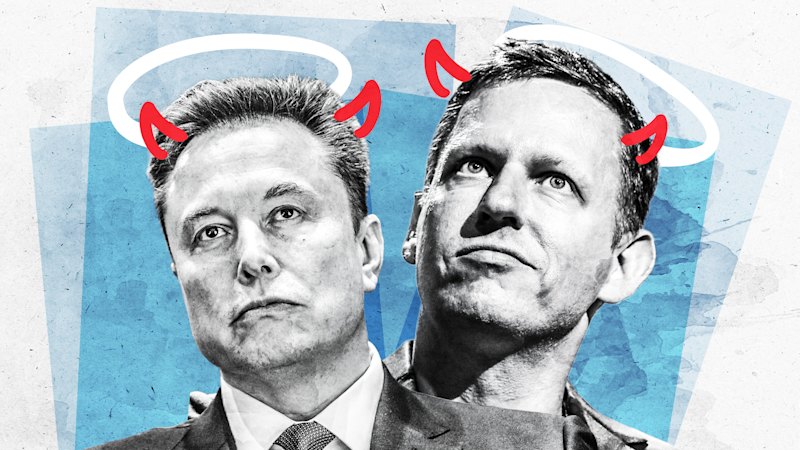
Silicon Valley’s technology leaders, including Elon Musk and Peter Thiel, are redefining their roles within the political landscape as they grapple with the implications of their innovations on democracy. Over the past decade, these influential figures have emerged as key players in shaping both technological advancements and political ideologies, particularly in the context of their support for Donald Trump and the rising influence of the so-called “tech right.”
The tech sector has long been associated with optimism surrounding productivity and innovation. Breakthroughs in technology have the potential to drive living standards upward, and both Musk and Thiel have invested in initiatives aimed at addressing significant global challenges. Thiel’s ventures focus on eliminating disease, extending human life, and developing new energy sources, while Musk’s ambitions include making life multi-planetary through reusable rockets.
Yet, the emergence of the tech right has positioned figures like Thiel and Musk in a controversial light. Once viewed as visionary entrepreneurs, they now face criticism as some members of the public label them as “evil geniuses.” The political scientist Ruy Teixeira observes that the left has struggled to engage with technological advancements, often prioritizing the mitigation of negative impacts over embracing new possibilities. This reactionary stance began in 2016 and has continued amid rising concerns about issues like artificial intelligence and social media influence.
Thiel’s endorsement of Trump at the 2016 Republican Convention marked a significant shift in Silicon Valley’s political alignment. This choice provided a form of moral validation for others in the tech community, who began to view Trump as a disruptive force capable of challenging bureaucratic inertia. Musk’s vision of a future where humanity thrives beyond Earth resonates with many who share a sense of urgency about the need for transformative change.
Despite their ambitions, the tech elite’s approach raises fundamental questions about the compatibility of their vision with democratic values. Carla Ibled, a research fellow at the University of Durham, suggests that both Musk and Thiel exemplify the archetype of the “founder” as a ruler in a post-democratic context. She argues that their insistence on providing a new form of “hope” conflicts with the principles of liberal democracy, which relies on checks and balances to prevent the concentration of power.
Critics argue that the Silicon Valley mindset risks oversimplifying complex societal challenges, framing issues such as inequality and healthcare as mere engineering problems to be solved through technology. Thiel’s lamentation over governmental inefficiencies in executing major projects like the Manhattan Project or the Apollo Program underscores a belief that technological solutions can replace political consensus.
As the tech elite navigate their roles, there exists a growing apprehension among the public regarding their influence. The societal implications of their innovations often unfold without broader public consent, raising concerns about accountability. For instance, agreements tied to services like Starlink require users to forgo traditional governance structures, hinting at a future where technological frameworks dictate societal norms without democratic input.
The notion that political legitimacy can be engineered reflects a disconnect between Silicon Valley’s objectives and the aspirations of democratic societies. As the landscape evolves, the challenge remains: how can the technological advancements heralded by figures like Musk and Thiel coexist with the fundamental principles of democracy? This question will likely shape public discourse and influence the future trajectory of both technology and governance in the years to come.