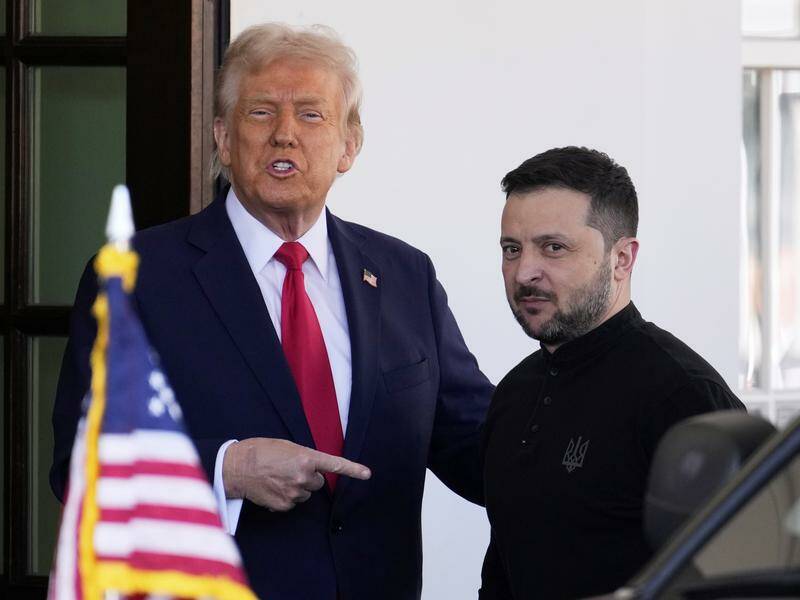
Ukrainian President Volodymyr Zelenskiy and former US President Donald Trump are preparing for a significant meeting in Florida aimed at discussing strategies to end the ongoing conflict in Ukraine. Scheduled for 1 PM local time on Sunday, their discussions come in the wake of escalating tensions highlighted by recent Russian air attacks that struck Kyiv and other regions, resulting in power outages across the capital.
The backdrop to these talks includes a series of Russian missile and drone strikes that occurred on Saturday, which Zelenskiy described as a direct response to ongoing US-facilitated peace negotiations. These assaults have intensified concerns about the viability of diplomatic efforts as they illustrate Russia’s determination to maintain pressure on Ukraine.
During their meeting, Zelenskiy plans to address several critical issues, including the future of the contested Donbas region and the status of the Zaporizhzhia nuclear power plant. Russian officials have made clear their demands for Ukraine to relinquish all control over the Donbas area, even parts currently under Ukrainian administration. This hardline stance raises doubts about whether Russian President Vladimir Putin would agree to any proposals resulting from the discussions.
Zelenskiy expressed his intention to negotiate a more favorable outcome regarding a recent US proposal, which suggests a complete withdrawal of Ukrainian forces from the Donbas. Should these negotiations falter, he indicated that the entire 20-point plan, developed through extensive negotiations, should be subject to a national referendum. According to Axios, US officials view Zelenskiy’s willingness to consider a referendum as a significant step, suggesting he may be open to territorial concessions, contingent upon a 60-day ceasefire to facilitate the vote.
Recent polling indicates that Ukrainian voters might oppose the proposed plan, adding another layer of complexity to the situation. This meeting with Trump follows weeks of diplomatic efforts and highlights the urgency of finding a resolution.
As the conflict has persisted, Russia has maintained control over Crimea since its annexation in 2014, and estimates suggest that it now occupies approximately 12 percent of Ukrainian territory. This includes about 90 percent of the Donbas region and significant portions of the Zaporizhzhia and Kherson areas.
Zelenskiy, speaking to reporters after arriving in Halifax, Nova Scotia, emphasized that the recent attacks demonstrate Putin’s reluctance for peace. In a joint statement with Canadian Prime Minister Mark Carney, who pledged $CAD 2.5 billion (approximately $2.73 billion AUD) in additional economic support for Ukraine, Carney reiterated the necessity of a cooperative approach from Russia for any peace agreement.
European Commission President Ursula von der Leyen also engaged in discussions with Zelenskiy on Saturday, reinforcing their shared goal of achieving a just and lasting peace that protects Ukraine’s sovereignty and territorial integrity. Following his meeting with Trump, Zelenskiy indicated he would continue dialogues with European leaders, highlighting the ongoing international efforts to support Ukraine amid the escalating crisis.