Brigitte Bardot, the iconic figure of French cinema and a symbol of sexual liberation, passed away at the age of 91. Her death marks the end of an extraordinary career that spanned decades and defined modern femininity in numerous ways. Best known as an actress, Bardot was also a singer, fashion icon, and passionate animal rights activist. Her impact on beauty standards and national identity in France remains profound.
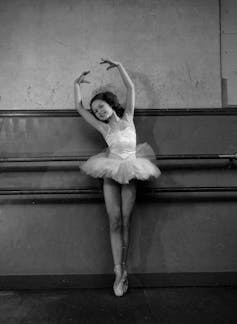
Born in 1934 to a well-off family in Paris, Bardot grew up in a strict Catholic environment. Her early passion for ballet led her to the Conservatoire de Paris, where she aimed to become a professional dancer. However, her striking looks soon propelled her into the world of modeling. By the age of 14, she graced the pages of Elle magazine, eventually catching the eye of director Roger Vadim, whom she married in 1952.
Breaking Boundaries in Film
Bardot’s film career took off in the early 1950s, but it was her role as Juliette in Vadim’s film And God Created Woman (Et Dieu… créa la femme, 1956) that catapulted her to international fame. Her performance was groundbreaking and challenged the conservative norms of 1950s France. Critics praised her, while censors and religious groups expressed concern over her portrayal of sexuality.
Despite lacking formal training, Bardot’s spontaneous acting style captivated audiences. She shone in Contempt (Le Mépris, 1963), where director Jean-Luc Godard utilized her fame as both spectacle and critique, especially in a memorable 31-minute dialogue with co-star Michel Piccoli. Bardot also showcased her dramatic talent in The Truth (La Vérité, 1960), playing a young woman on trial for murder, and in Long Live Maria (Viva Maria, 1965), a rare female buddy film.
With her unique fashion sense, she popularised trends like the choucroute hairstyle and the Bardot neckline, influencing generations of women. Her off-screen persona combined allure and provocation, embodying the archetype of the modern “sex kitten.” She famously remarked, “it is better to be unfaithful than to be faithful without wanting to be,” reflecting her commitment to emotional and sexual freedom.
A Life Beyond the Silver Screen
At the age of 39, Bardot retired from acting in 1973, expressing disillusionment with fame, stating, “It suffocated and destroyed me.” She redirected her focus to animal rights, founding the Brigitte Bardot Foundation in 1986. Her activism against animal cruelty, fur farming, and whaling became a hallmark of her later years.
Yet, her outspoken views on politics, particularly regarding immigration and Islam, sparked controversy from the mid-1990s onwards. Bardot’s statements often drew criticism, leading to a complex legacy that contrasted her earlier image as a liberating figure. Despite her controversial remarks, she remained a symbol of defiance against societal norms.
Throughout her life, Bardot inspired countless artists, musicians, and filmmakers, including Andy Warhol and Serge Gainsbourg. Later generations, such as Kate Moss and Amy Winehouse, acknowledged her influence on their work. Notably, Bardot never resorted to cosmetic surgery, advocating for natural beauty and embracing aging.
As Bardot reflected on her life, she expressed bewilderment at her lasting impact, stating, “I don’t understand why the whole world is still talking about me.” The answer lies in her unwavering spirit and the cultural legacy she leaves behind—one that continues to evoke fascination, admiration, and debate.
Brigitte Bardot’s life and career encapsulated the complexities of femininity, freedom, and societal expectations. As the world mourns her passing, her influence on cinema, fashion, and activism remains undeniable, marking her as one of the most significant cultural figures of the twentieth century.