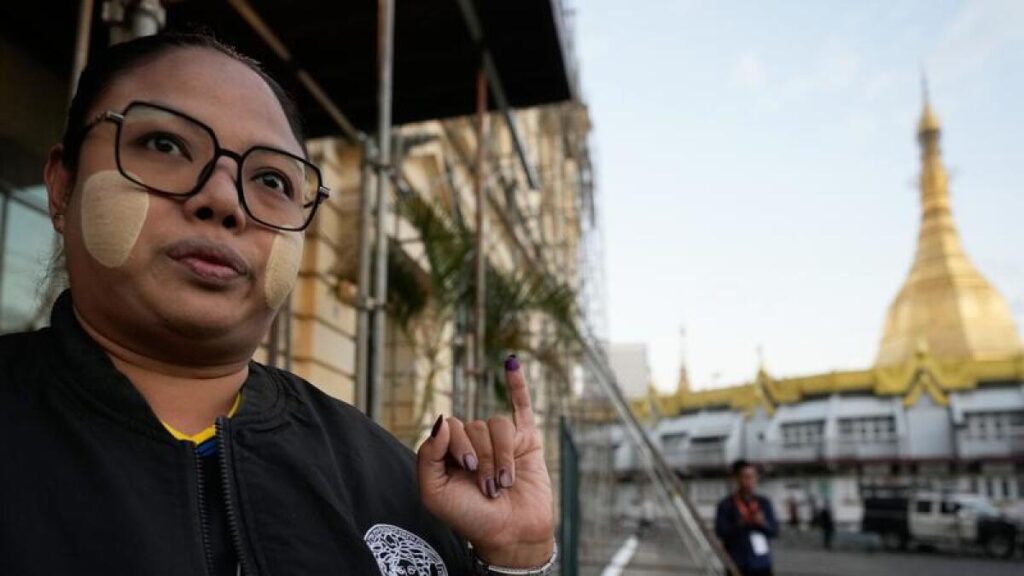
The military junta in Myanmar conducted elections on January 7, 2024, amid widespread criticism and low voter turnout. This controversial three-phase voting process is intended to establish political stability in the impoverished Southeast Asian nation, which has been engulfed in turmoil since the military coup in February 2021. International observers, including the United Nations and various human rights organizations, have denounced the elections as neither free nor fair, citing the absence of anti-junta political parties and restrictions on criticism regarding the polls.
The situation remains dire for pro-democracy advocates, particularly for Aung San Suu Kyi, the Nobel Peace Prize winner who was ousted from power after her National League for Democracy (NLD) party won a significant victory in the 2020 general elections. Currently, she is in detention, and the NLD has been dissolved. The military-aligned Union Solidarity and Development Party (USDP), which is led by retired generals, is expected to dominate the elections with only a fraction of competition, as it fields one-fifth of the candidates.
International Criticism and Political Implications
Political analyst Lalita Hanwong from Kasetsart University in Thailand criticized the junta’s election strategy, suggesting it is designed to “prolong the military’s power of slavery over people.” She predicts that the USDP and other military-aligned factions will collaborate to form the next government.
Initial reports indicate that voter turnout was significantly lower than that of the 2020 election, with residents from various cities across Myanmar sharing their observations. The elections will continue with additional voting rounds scheduled for January 11 and January 25, covering 265 of Myanmar’s 330 townships, despite the junta’s inability to exert control over all regions.
Junta leader Min Aung Hlaing participated in the election by casting his vote in the heavily secured capital of Naypyitaw. In a display of pride, he was seen on state media holding up his ink-stained finger, a requirement to prevent multiple voting. When asked about his aspirations for the presidency, he downplayed his ambitions, stating, “When the parliament convenes, there is a process for electing the president.”
Reactions to the Election
The UN Special Envoy for Human Rights in Myanmar, Tom Andrews, condemned the election process, asserting that it does not present a feasible solution to the ongoing crisis in the country. He emphasized the need for the international community to reject the elections outright.
In response, junta spokesman Zaw Min Tun acknowledged the criticisms but maintained that the elections would lead to political stability. “We believe there will be a better future,” he said, expressing hope for the junta’s vision despite widespread skepticism.
As Myanmar navigates this turbulent political landscape, the implications of these elections will likely resonate far beyond its borders, drawing attention from global leaders and human rights advocates.