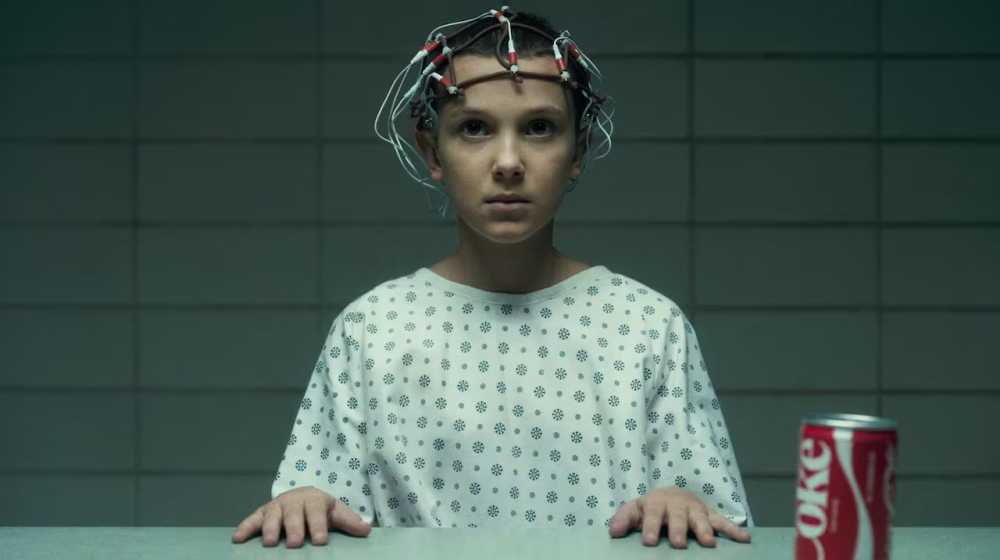
The long-awaited fifth season of Stranger Things has returned, drawing viewers back to the fictional town of Hawkins, Indiana. As the characters confront their final battle against Vecna, fans are left wondering whether the show’s premise has roots in reality. The narrative intertwines elements of government conspiracy, particularly surrounding the mysterious Montauk Project, a theory that has captivated many since the Cold War era.
The Duffer Brothers, who created Stranger Things, initially titled the series “Montauk.” This name reflects its origins in the seaside town of Montauk, New York, where a military base known as Camp Hero allegedly hosted clandestine experiments. Conspiracy theorists assert that the U.S. government conducted secretive tests on children, exploring themes like psychic warfare and time travel. According to Matt Duffer, the idea for the show was sparked during their high school years when they first encountered this conspiracy theory.
In a conversation with PEDESTRIAN.TV, Duffer explained, “It involved monsters and other dimensions and government experiments and children.” This blend of fantastical and sinister elements inspired the show’s narrative, leading to the creation of its central characters and the mysterious Hawkins Lab.
The Montauk Project is said to have taken place between the late 1970s and early 1980s, as detailed in Preston Nichols’s 1992 book, *The Montauk Project: Experiments in Time*. Nichols claimed he was involved in experiments concerning time travel and mind control, allegedly using kidnapped children. Another participant, Al Bielek, suggested that a psychic brother accidentally created a monster during one experiment, a tale that resonates with the show’s Demogorgon.
The Duffer Brothers drew parallels between Montauk and real historical programs like MK-ULTRA, a CIA initiative from the 1950s and 1960s that involved psychological manipulation and drug testing. Many fans believe that Hawkins Lab represents a convergence of Montauk lore and MK-ULTRA history, showcasing the terrifying consequences of unchecked scientific exploration.
From Cold War Conspiracies to a Cultural Phenomenon
The series masterfully captures the essence of small-town America, blending nostalgia with horror, largely influenced by the backdrop of Cold War paranoia. When the Duffer Brothers pitched the show to Netflix, they incorporated elements from Montauk legends, emphasizing secret government research facilities hidden in plain sight.
In discussing their creative process, Ross Duffer reflected, “We went, well, what if we just combine these ideas? What if a monster took this kid?… And that was really how Stranger Things was birthed.” This innovative approach transformed a conspiracy theory into a compelling narrative about friendship, trauma, and the trials of growing up.
While Stranger Things stops short of claiming to be a true story, it taps into a rich vein of government-related fears that have persisted over decades. Some key inspirations include:
– **MK-ULTRA**: Real CIA experiments on mind control and drug testing.
– **The Philadelphia Experiment**: A rumored event in 1943 when a Navy ship allegedly vanished during invisibility tests, purportedly leading to time travel.
– **The Stargate Project**: An actual U.S. Army-funded initiative during the 1970s that investigated psychic abilities and “remote viewing.”
These real-life anomalies create a blurry line between fact and fiction, providing a fertile ground for a narrative focused on government experiments and the supernatural.
The Duffer Brothers’ Vision
Despite the eerie origins of the show, the Duffer Brothers focus on the emotional core of the narrative. Matt Duffer remarked, “We think of Stranger Things as a coming-of-age story, and this final season is about these characters reaching adulthood.”
This emphasis on emotional growth has allowed the series to maintain its appeal, even as it delves into wild lore involving psychic experimentation and interdimensional threats. While the final episode is set to air on January 1, 2024, the impact of Stranger Things on popular culture will likely endure far beyond its conclusion.
As the Duffer Brothers look to the future, they are exploring new projects outside the confines of Hawkins. “We are working on a spin-off,” Matt teased, hinting at a departure from the established universe. “It doesn’t involve any of the characters or Hawkins. Or even the Upside Down. Or the 80s. So it’s very, very different, but also very much Stranger Things.”
While the series may be drawing to a close, the fascination with its inspirations, including the Montauk Project, ensures that the allure of conspiracy and creativity will continue to thrive in the cultural landscape.