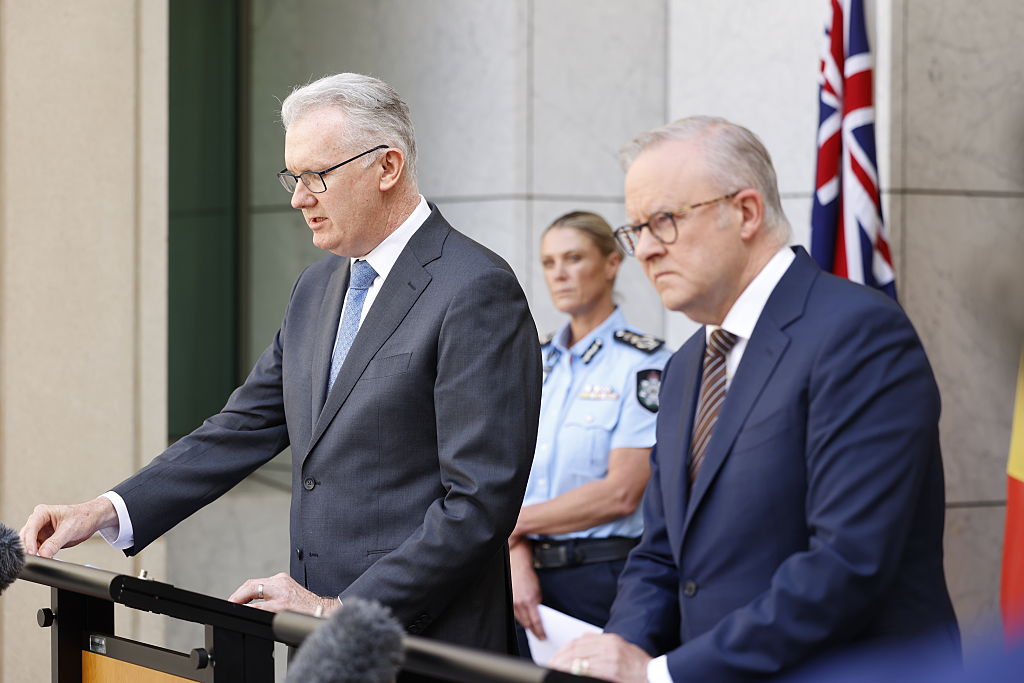
CANBERRA, AUSTRALIA - DECEMBER 19: Minister for Home Affairs Tony Burke speaks to the media at Parliament House on December 19, 2025 in Canberra, Australia. Albanese held the press conference as the government comes under pressure over the recent Bondi mass shooting, promising to tighten gun laws across the country. (Photo by Hilary Wardhaugh/Getty Images)
The Labor Party has declared a firm stance against anti-Semitism within its membership, warning that members could face expulsion for such behavior. This initiative follows significant media coverage of a letter from the Labor Israel Action Committee (LIAC) addressed to the New South Wales (NSW) leadership. The letter highlighted concerns that anti-Semitic attitudes have become increasingly prevalent among certain factions of the party.
In their correspondence, LIAC urged both Labor Prime Minister Anthony Albanese and NSW Premier Chris Minns to address the issue directly. They described a “rising tide of anti-Semitism” and reported instances of “extremely hateful language” being used at party branch meetings. The letter’s alarming claims prompted immediate calls for action within the party.
In response to these developments, Assistant Foreign Minister Matt Thistlethwaite affirmed that the Labor Party would not tolerate anti-Semitic behavior. He encouraged party members to report any such incidents, stating that swift investigations would be initiated to address the concerns raised by LIAC.
The Labor Party’s commitment to confronting anti-Semitism highlights a broader effort to foster an inclusive environment within its ranks. As political discourse continues to evolve, the party aims to ensure that its principles align with the values of diversity and respect.
The situation underscores the importance of vigilance against discrimination in all forms within political organizations. The Labor Party’s proactive approach may serve as a model for other political entities facing similar challenges, as they navigate the complexities of modern political landscapes while striving to uphold their core values.
Going forward, the party’s leadership will likely focus on implementing educational initiatives and monitoring mechanisms to prevent the emergence of hate speech or discriminatory attitudes. By taking a strong stance now, the Labor Party sets a precedent that prioritizes unity and respect among its members as it prepares for future challenges.