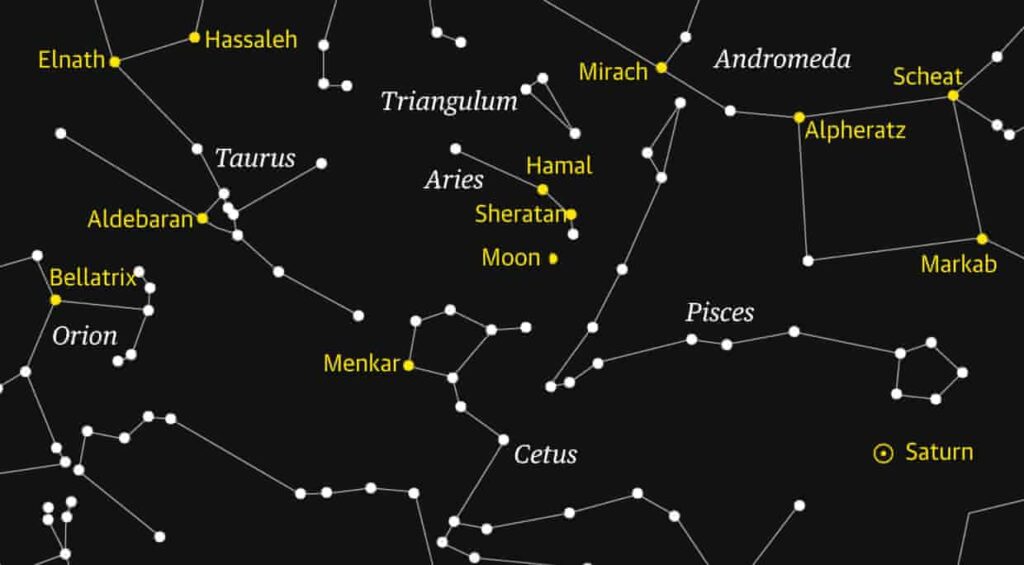
Astronomy enthusiasts can spot the faint constellation of Aries this week, as it becomes more visible in the night sky. Located between Taurus to the east and Pisces to the west, Aries is best observed during the deep winter months in the northern hemisphere.
Historical Significance of Aries
Aries is one of the oldest constellations, originally identified by the early Babylonians as a hired hand tending to fields. Over time, it evolved into the image of a ram, a depiction that has persisted in various cultures. The ancient Egyptians associated Aries with Amun-Ra, the ram-headed god representing creativity and fertility. In Greek mythology, Aries is famously linked to the quest for the golden fleece by Jason and the Argonauts.
Despite its rich history, Aries is not among the brightest constellations. It comprises primarily two notable stars: Hamal and Sheratan. These stars are relatively dim, making it challenging for casual observers to identify the constellation without assistance.
Viewing Conditions and Tips
This week, the moon will aid in locating Aries. On the night of December 29, 2023, observers in London can look south at around 20:00 GMT. The moon will be approximately 72% illuminated, acting as a useful reference point in the dark sky. For those in the southern hemisphere, the best view will be towards the north-west as the sun sets.
For individuals eager to explore the night sky, this is an excellent opportunity to engage with ancient celestial stories while observing one of the zodiac’s lesser-known constellations. Whether using a telescope or simply the naked eye, identifying Aries offers a delightful connection to history and mythology.