The U.S. Women’s National Team (USWNT), a powerhouse in women’s soccer, finds itself ranked surprisingly low in the recent ESPN FC Women’s Rank. Despite being the reigning Olympic champions and boasting four World Cup titles, the USWNT has only seven players listed, with none in the top 20. This raises significant questions regarding the voting dynamics and the landscape of women’s soccer.
A significant factor contributing to this ranking is the overall Eurocentric focus prevalent in women’s soccer today. The lack of representation for American players can be attributed to a year marked by the absence of key forwards, which has diminished their visibility on the global stage. Emily Fox, occupying the often-overlooked fullback position, is the highest-ranked American at No. 23. She had a standout performance with Arsenal, helping the team secure victory in the UEFA Champions League.
The voting process for these awards tends to favor high-profile players, particularly goal scorers. In a year where the USWNT’s best forwards were sidelined, the absence of notable names has diminished American representation. The most recent voting for the Ballon d’Or saw Fox finishing 25th, indicative of the challenges facing American players in gaining recognition.
Changing Dynamics in Women’s Soccer
The current landscape of women’s soccer is heavily influenced by major tournaments, particularly in Europe. The 2025 UEFA European Championship significantly overshadowed other international competitions, including those in Africa and South America. Historically, the USWNT has relied on strong performances in World Cups or Olympics to enhance their visibility and rankings. The last American to win the Ballon d’Or was Megan Rapinoe in 2019, following her exceptional performance at the World Cup.
European countries have dominated recent awards, with Spain and England leading the way in the ESPN rankings. Spain, the current World Cup champion, contributed nine players to the top 50, while England followed closely with eight. This trend reflects not only the depth of talent in these nations but also the growing commercial appeal of their leagues.
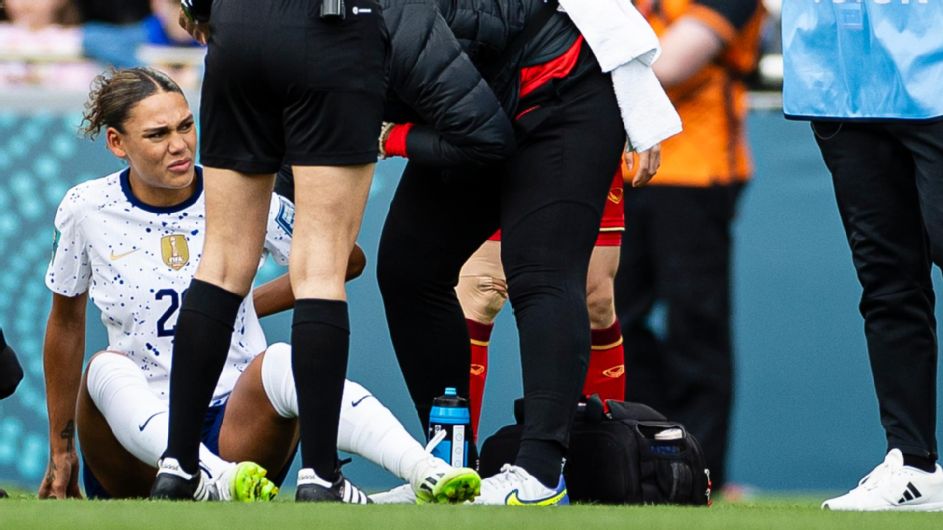
While the USWNT has world-class players, many established stars have been absent due to various circumstances. For instance, Sophia Smith and Mallory Swanson, both key forwards, did not participate in competitive matches as they anticipated the births of their first children. Additionally, Trinity Rodman faced injuries, limiting her time on the field, yet she still managed to rank No. 37 on the list.
The Path Forward for USWNT
The transitional phase of the USWNT has led to an experimental year, with Emma Hayes, the team’s head coach, awarding 27 first caps in just 30 matches. The absence of competitive games during 2025 has further complicated the team’s ability to showcase its talent. Notably, defender Naomi Girma, praised by Hayes as “the best defender I’ve ever seen,” struggled with injuries and was unable to contribute significantly.
Despite these challenges, the USWNT still possesses remarkable talent. Players like Alyssa Thompson, who recently made a high-profile transfer to Chelsea, and Sam Coffey, consistently performing well for the Portland Thorns, continue to demonstrate their capabilities. Coffey’s contributions, in particular, have led to suggestions that she would rank higher if she were from a European nation.
In the coming years, the USWNT’s fortunes may change with a strong performance in the next World Cup scheduled for 2027. As the team rebuilds and integrates new players, it is essential for the soccer community to recognize the depth of talent within the USWNT. The current rankings reflect a momentary setback rather than a decline in quality, and the team remains poised to reclaim its position among the world’s elite.