A long-standing butcher shop in New Farm, Brisbane, is poised for a major transformation into a boutique following a proposal submitted to the Brisbane City Council just before Christmas 2022. The former Petersen’s Butcher Shop, which operated at the site since 1971, has a rich history dating back to 1901 when it first opened its doors. With Petersen’s closing last year, the site’s owners, Saidar Pty Ltd, are seeking to repurpose the heritage buildings located at 105 and 109 James Street.
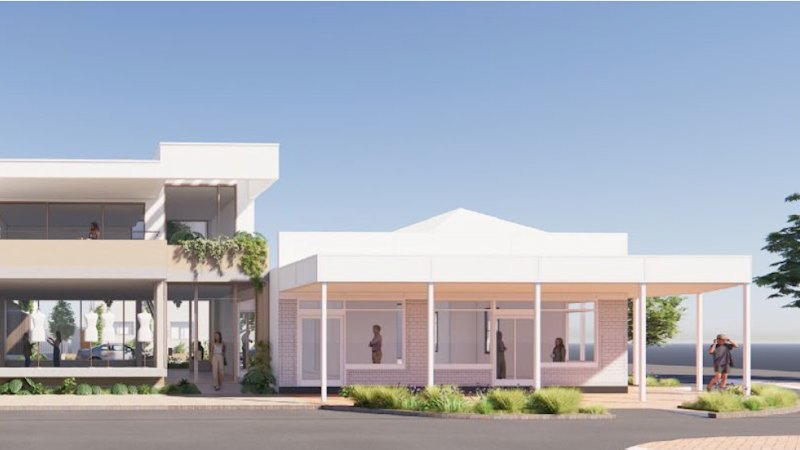
The proposal involves the consolidation of four lots into three to “reactivate” the heritage buildings, along with plans to construct a new two-storey building between them. This new structure will feature a ground-floor retail space measuring 308 square metres and 150 square metres of office space on the upper floor, with an additional 50 square metres extending to the rear of number 109. Given that the planned ground-floor area exceeds the 250 square metres allowed under local zoning regulations, the development falls under impact assessment, opening it to public objections.
Heritage and Community Focus
In a report submitted to the Brisbane City Council, Grace Forno, a senior town planner at Property Projects Australia, states that the proposal is “on balance, in the public interest.” Forno emphasizes that the development should be viewed in two components: the restoration of the existing heritage structures and the introduction of a new building that complements the historical significance of the site.
“The proposed design celebrates the heritage value of the site, recognising that two of the existing buildings are identified on the Brisbane City Council Local Heritage Register, and seeks to preserve these buildings into the future,” Forno notes. The intention is to ensure that the new construction aligns with the historical character of the area.
Historical records indicate that the butcher shop at 105 James Street has operated continuously since 1901, previously known as the New Farm State Butchery. This establishment was part of a government initiative in 1918 aimed at regulating the prices of essential goods like meat and sugar during a time of economic fluctuation.
Forno emphasizes that the existing buildings’ heritage value and the site’s potential community benefits were central to the applicant’s vision for the project. “The proposed development provides a high-quality, considered architectural design that responds to the site, particularly its heritage value, and the surrounding context,” she adds.
Future Prospects
As the proposal moves forward, the community and local stakeholders are encouraged to voice their opinions during the public objection period. The combination of preserving historical elements while introducing modern retail and office spaces aims to revitalize this corner of New Farm, potentially enhancing the local economy and community engagement.
The development serves as a reminder of the evolving landscape in urban areas, balancing the need for modernization while respecting historical roots. As Brisbane continues to grow, projects like this highlight the importance of thoughtful development that honors the past while looking to the future.
For updates on this proposal and other local developments, residents are encouraged to subscribe to local news outlets and community newsletters.