The history of alchemy reveals a complex relationship between ancient practices and the emergence of modern science, as outlined in Philip Ball’s book, *Alchemy: An Illustrated History of Elixirs, Experiments, and the Birth of Modern Science*. Ball illustrates how alchemical pursuits, once steeped in mysticism and ambition, paved the way for contemporary scientific inquiry.
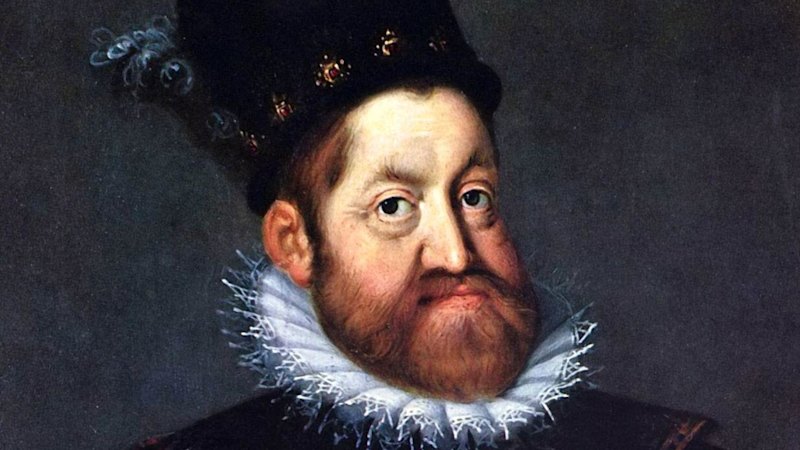
In a noteworthy anecdote, renowned nuclear physicist Ernest Rutherford reacted strongly in 1901 when his colleague Frederick Soddy described their observations of radioactive thorium transforming into radon gas as “transmutation.” Rutherford’s caution reflected the stigma surrounding alchemy, a field long associated with greed and deception. Despite this, the concept of transmutation did not remain confined to legend; in 1980, scientists successfully created a few thousand atoms of gold by bombarding bismuth with carbon-12. Such achievements might not have impressed the opulent Holy Roman Emperor Rudolph II, who patronized alchemists and thinkers of the Renaissance, but they underscore the enduring relevance of alchemical pursuits.
Ball traces the origins of alchemy back to ancient civilizations, including Egypt, China, Greece, and the Middle East. However, it was in medieval and Renaissance Europe where alchemical practices flourished most notably. The book details the lives of prominent figures in the field, highlighting the dedication of those who sought to transmute base metals into gold—a pursuit known as chrysopoeia.
As Ball examines the motivations of these historical figures, he offers insights into their contexts. Many were men driven by curiosity and the constraints of their era, often operating within a framework that blended scientific inquiry with spiritual exploration. While the mid-19th century cast alchemy as a relic of superstition, Ball argues that many practitioners genuinely explored the natural world, albeit through misguided methods.
The quest for the philosopher’s stone was just one of many dangerous experiments undertaken by these early scientists. Alchemy often involved toxic substances, such as mercury, which remains a significant health risk for many individuals today, particularly among gold miners in developing regions. The hazardous nature of their work raises questions about how these early practitioners survived to share their findings.
Notable figures such as Paracelsus, George Ripley, and John Dee contributed significantly to the field. Dee, who fled England during the reign of Mary I, eventually gained favor in Rudolph II’s court, showcasing the intersection of science and mysticism during that era. Ball skillfully weaves the narratives of these individuals, illustrating the diverse motivations and backgrounds of the intellectual elite of their time.
Ball’s exploration highlights the collaborative environment of Rudolph II’s court, where astronomers Tycho Brahe and Johannes Kepler worked alongside alchemists and astrologers. The complex relationships among these figures underscore a shared pursuit of knowledge, blurring the lines between science and the occult. Isaac Newton and Robert Boyle, two foundational figures in modern science, engaged with alchemical ideas, demonstrating that the journey from alchemy to chemistry was not a straightforward one.
Ultimately, the text posits that while science has triumphed over the mysticism of alchemy, the latter laid essential groundwork for future discoveries. As Arthur C. Clarke famously noted in 1962, “Any sufficiently advanced technology will be seen as magic.” The advancements we take for granted today have deep roots in the explorations of these early experimentalists.
*Alchemy: An Illustrated History of Elixirs, Experiments, and the Birth of Modern Science* serves as a comprehensive guide to this fascinating intersection of science and mysticism. Ball’s narrative is both engaging and educational, inviting readers to appreciate the profound impact of alchemical practices on the evolution of scientific thought. Through his work, we gain a deeper understanding of how the relentless curiosity of those who came before us has shaped the world we inhabit today.